
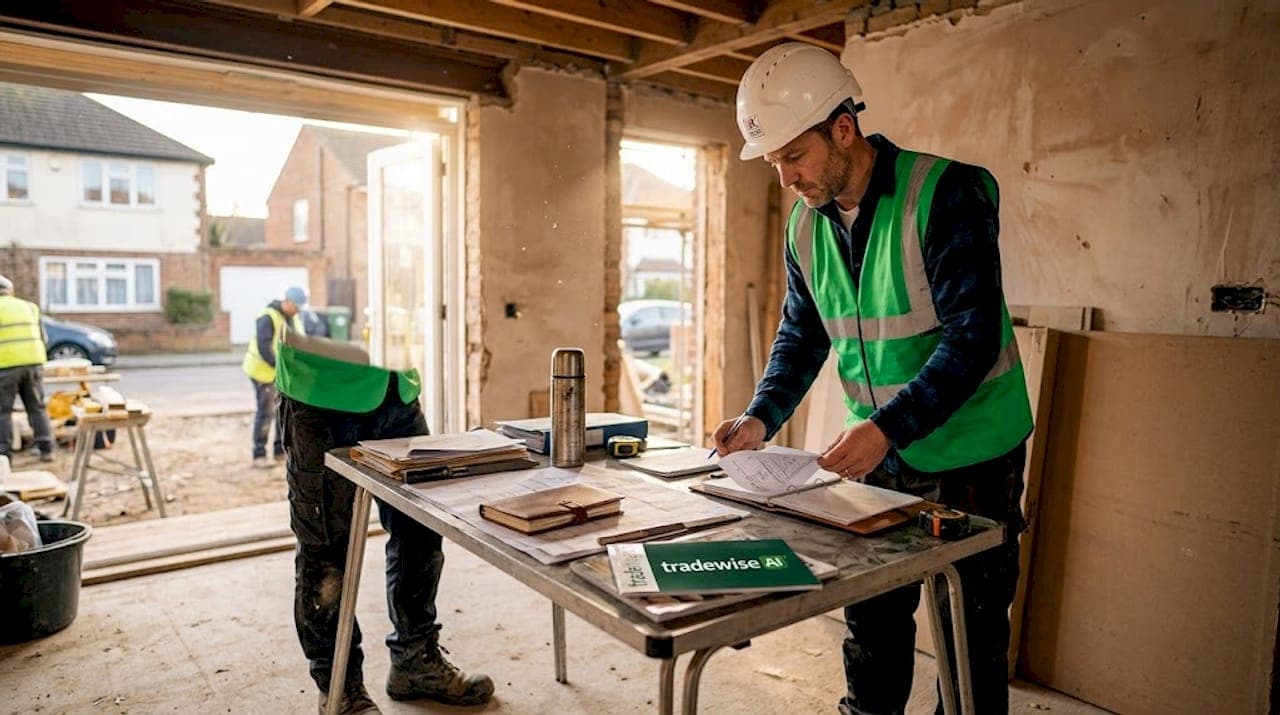
Managing subcontractors is where construction projects are won or lost. Poor vetting, missed payments, and communication breakdowns cost UK contractors far more than most care to admit. These construction subcontractor management tips are designed to cut through the noise and give you a practical framework that works on real sites, with real trades, under real pressure. Whether you are running a small residential build or a multi-phase commercial project, the way you manage your subbies will directly shape your margins, your reputation, and your ability to deliver on time.
Table of Contents
- Key takeaways
- 1. Define your subcontractor selection criteria before you advertise
- 2. Write contracts that actually protect you
- 3. Communicate schedules proactively, not reactively
- 4. Pay on time, every time
- 5. Build relationships, not just rosters
- 6. Maintain at least two vetted options for critical trades
- 7. Use technology to connect your workflows
- 8. Treat safety oversight as an ongoing activity, not a box-tick
- My honest take on what actually works
- Manage your subcontractors better with Tradewisehq
- FAQ
Key takeaways
| Point | Details |
|---|---|
| Vet before you commit | A scored prequalification process catches compliance gaps before they become costly site problems. |
| Confirm schedules in advance | Checking in 48 hours before start reduces scheduling conflicts and no-shows significantly. |
| Pay faster, retain better | Offering 7-day payment terms keeps your best trade partners coming back to your jobs first. |
| Integrate your tools | Connecting scheduling, billing, and compliance in one platform prevents margin erosion and manual errors. |
| Safety oversight is ongoing | Document checks alone are not enough. Regular site walks and certification verification reduce incidents. |
1. Define your subcontractor selection criteria before you advertise
The biggest mistake UK construction managers make is treating subcontractor selection as an informal process. You ring someone you know, they seem reliable, and you hand them a package. That approach works until it does not.
A formal prequalification process completed before bidding takes roughly 30 minutes per subcontractor and can save several weeks of delays and cost overruns during the build. That is not a marginal gain. That is the difference between a profitable project and a painful one.
Your selection criteria should cover:
- Valid licences and trade certifications relevant to the scope
- Adequate public liability and employers' liability insurance
- Financial stability checks (credit reports, references from previous main contractors)
- Safety record and any HSE improvement notices or prohibition notices
- At least two verifiable references from comparable projects in the last 24 months
Score each subcontractor against these criteria consistently. A scored system removes gut-feel bias and gives you a defensible paper trail if a dispute arises later.
Pro Tip: Build a pre-approved subcontractor register and review it quarterly. Removing underperformers and adding new vetted trades keeps your pool competitive and your standards high.
2. Write contracts that actually protect you
A handshake and a WhatsApp message are not a contract. Yet a surprising number of UK contractors still rely on informal agreements, particularly with trades they have worked with before. Familiarity breeds complacency, and complacency breeds disputes.
Good subcontract agreements should define scope of works precisely, including what is explicitly excluded. They should set out payment terms, retention arrangements, variation procedures, and defects liability periods. They should also reference the programme and make clear that the subcontractor is bound by the main contract conditions where applicable.
Construction contract negotiation tips worth knowing: always include a clause requiring the subcontractor to notify you of delays within 24 hours of becoming aware of them. Most standard forms allow delay claims only if proper notice is given. Without that clause, you lose your ability to manage knock-on effects before they cascade.
3. Communicate schedules proactively, not reactively
Site scheduling fails when communication is one-directional. You issue a programme, subbies receive it, and everyone assumes everyone else has read it. They have not.
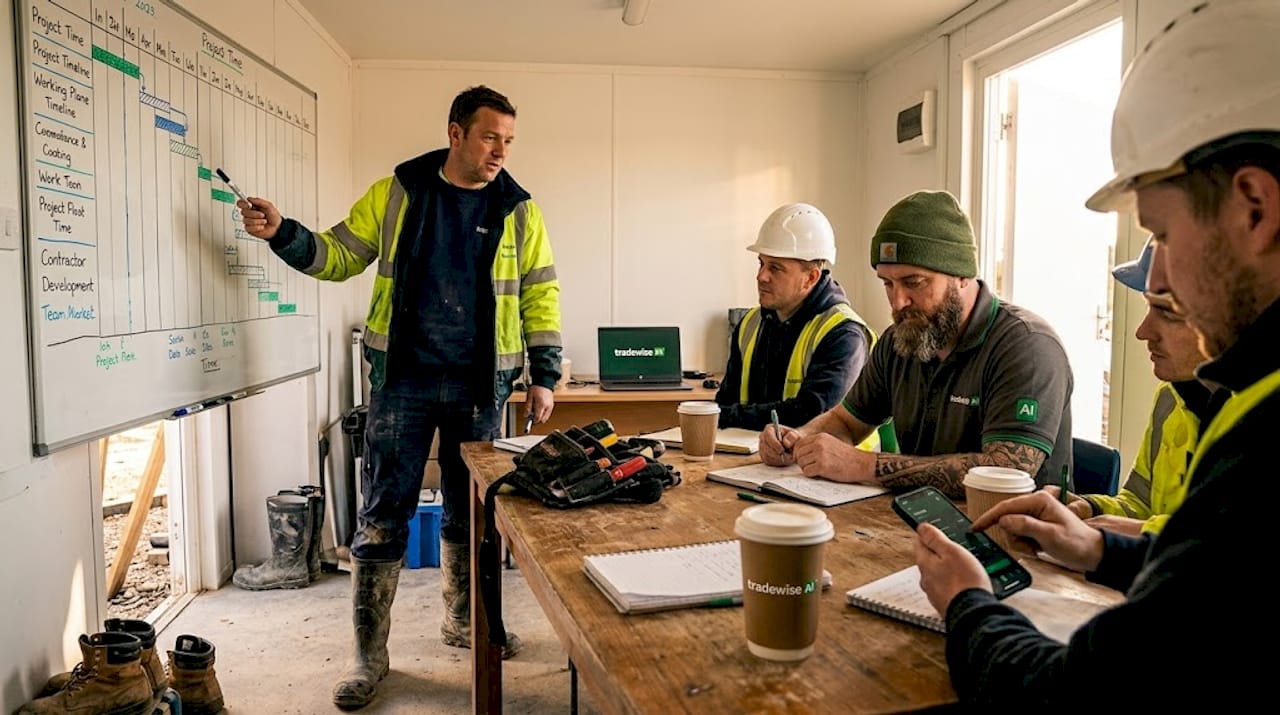
Confirming schedules 48 hours before start reduces roughly half of all scheduling conflicts caused by forgotten commitments or overbooking. That single habit, practised consistently, will improve your daily site logistics more than any software purchase.
Beyond confirmation calls, the way you run your coordination meetings matters. Collaborative pull-planning sessions where subcontractors actively map their own dependencies outperform passive status updates every time. When a plasterer understands why the electrician needs to second-fix before they can board, they protect that sequence themselves rather than waiting to be told.
- Send a written schedule confirmation to all active subcontractors 48 hours before their start date
- Use pull-planning in your weekly coordination meetings to surface sequencing conflicts early
- Communicate any delay to all affected trades within the same working day it is identified
- Use visual tools such as Gantt charts or site boards to keep the programme visible on site
Pro Tip: Buffer subcontractor duration estimates by at least one day per trade. Subcontractors are consistently optimistic about how long tasks take. That one-day buffer per trade prevents cascading delays across the programme.
4. Pay on time, every time
This one is not complicated, but it is where many main contractors quietly damage their own supply chains. Paying subcontractors within 7 days significantly improves your ability to retain preferred trade talent compared to standard 30-day terms. When a good electrician or groundworks crew has three jobs to choose from, they go to the contractor who pays fastest. That is the reality.
Practical steps to tighten your payment process:
- Link every payment to a signed purchase order so scope and value are agreed before work starts
- Require lien waivers or equivalent written confirmations upon payment to reduce future disputes
- Track all scope changes with formal variation orders and update the subcontract value in writing
- Use a payment schedule tied to measurable milestones rather than calendar dates alone
Wage compliance is also becoming a legal issue, not just a reputational one. In the United States, general contractors face joint liability for subcontractors' unpaid wages under new legislation effective July 2026. While UK legislation differs, the direction of travel in labour compliance is clear. Knowing what your subbies are paying their workers is not intrusive. It is sound risk management.
5. Build relationships, not just rosters
There is a meaningful difference between having a subcontractor on your approved list and actually having a relationship with them. The best UK construction managers treat their key trades as long-term partners rather than interchangeable resources.
Capacity-building programmes that offer bonding support, business development assistance, and pipeline visibility help stabilise subcontractor availability and reduce schedule risk. Hensel Phelps in the US has formalised this approach, and the principle translates directly to UK contractors who want to secure reliable trades on future projects.
Practically, this means giving preferred subcontractors early sight of upcoming work so they can plan resource. It means providing honest feedback after each project. It means paying on time and treating their teams with respect on site. None of this costs money. All of it builds loyalty.
6. Maintain at least two vetted options for critical trades
Maintaining at least two vetted subcontractors for each critical trade is one of the most underused risk management strategies in UK construction. If your only groundworks contractor goes off sick, or your preferred electrician takes on a bigger job elsewhere, you need a qualified backup ready to step in without scrambling.
This does not mean keeping a long list of names you have never worked with. It means having genuinely vetted, prequalified alternatives who know your standards and have met your selection criteria. Two solid options per critical trade is enough. Three is better.
7. Use technology to connect your workflows
Managing subcontractors across spreadsheets, email threads, and WhatsApp groups is not a system. It is organised chaos. When procurement, scheduling, billing, and compliance tracking live in separate places, you lose visibility and make expensive mistakes.
Construction-specific ERP platforms that connect procurement, valuations, and billing in one system improve margin visibility and reduce manual reconciliation errors. The practical benefit is that your live cost-to-date figures actually reflect what is happening on site, rather than what happened three weeks ago when someone last updated a spreadsheet.
Here is a quick comparison of management approaches:
| Approach | Visibility | Error risk | Time cost |
|---|---|---|---|
| Spreadsheets and email | Low | High | High |
| Single-purpose apps | Medium | Medium | Medium |
| Integrated trade management platform | High | Low | Low |
Pro Tip: Proactively tracking subcontractor documents with expiry alerts means you never discover an insurance lapse or expired CSCS card on the morning of a site visit. Set automated reminders at 30 and 7 days before expiry.
8. Treat safety oversight as an ongoing activity, not a box-tick
Collecting a method statement and RAMS pack at the start of a job is the minimum. It is not subcontractor safety management. Lapses in subcontractor safety oversight are a leading cause of on-site incidents, and the gap is almost always between what the paperwork says and what is actually happening on site.
Effective safety oversight requires a shift from reactive to proactive practice. That means:
- Conducting joint safety walks with subcontractor supervisors weekly, not just after an incident
- Verifying certifications such as CSCS cards, IPAF, and PASMA at regular intervals, not only on day one
- Using safety prequalification scoring to evaluate a subcontractor's safety culture before awarding work
- Holding brief toolbox talks that include subcontractor operatives, not just your own workforce
"The cost of ignoring subcontractor safety management is not just financial. It is the human cost of preventable incidents, and the reputational cost that follows a serious site accident."
As a principal contractor under CDM 2015, you carry legal responsibility for the health and safety of everyone on your site, including subcontractor operatives. That responsibility does not transfer to the subcontractor when you issue them a package.
My honest take on what actually works
I have seen construction managers follow every tip in every guide and still struggle with their subcontractors. The reason is usually the same. They treat subcontractor management as an administrative task rather than a relationship management discipline.
In my experience, the single biggest lever is communication frequency. Not formal meetings. Not lengthy email chains. Short, direct conversations that happen before problems escalate. The managers who call their key trades on a Monday morning to check on the week ahead avoid 80% of the conflicts that others spend Friday afternoons firefighting.
I also think the industry vastly underestimates how much payment speed matters. I have watched excellent subcontractors quietly deprioritise a main contractor's work because they knew payment would take 45 days. They never said anything. They just became harder to get hold of. Pay fast, and you become the client everyone wants to work for.
On technology, my view is straightforward. You do not need the most expensive platform. You need one place where schedules, documents, and payments are visible to everyone who needs to see them. The tool matters less than the discipline of actually using it.
— Mateusz
Manage your subcontractors better with Tradewisehq
If you are spending more time chasing paperwork, confirming schedules by text, and reconciling payments manually than you are actually managing your project, Tradewisehq was built to fix that.
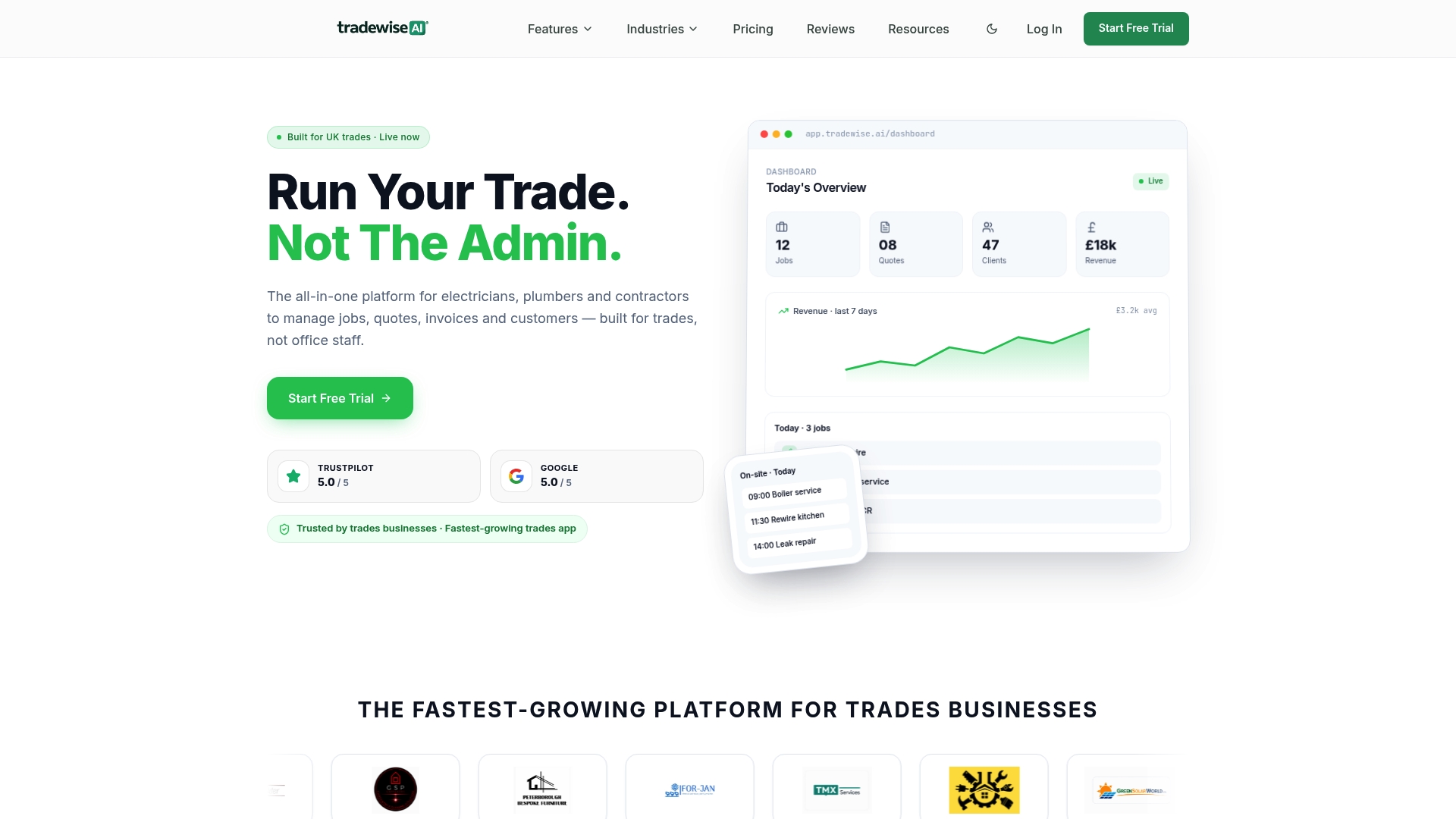
Tradewisehq is an AI-powered platform for tradespeople and contractors that brings job management, scheduling, document control, compliance tracking, invoicing, and client communication into one mobile-first system. You can confirm subcontractor schedules, track document expiry dates, manage purchase orders, and monitor live costs without switching between five different tools. For UK construction managers who want tighter oversight without more admin, it is the kind of platform that pays for itself quickly. Explore what Tradewisehq can do for your subcontractor management workflow and see how much time you get back in your first week.
FAQ
What is subcontractor management in construction?
Subcontractor management covers the full process of selecting, contracting, scheduling, paying, and overseeing specialist trades on a construction project. Good management reduces delays, cost overruns, and compliance risks.
How do I vet subcontractors effectively?
Use a scored prequalification process that checks licences, insurance, financial stability, safety record, and references before awarding any work. A 30-minute formal assessment upfront prevents weeks of problems later.
How often should I review subcontractor performance?
Review performance at the end of each project and update your approved register quarterly. Regular reviews keep your subcontractor pool competitive and remove underperformers before they cause problems on future jobs.
What payment terms work best for subcontractors?
Paying within 7 days of a valid application significantly improves retention of preferred trades compared to standard 30-day terms. Faster payment makes you the contractor subbies prioritise when they have multiple jobs available.
What technology helps with subcontractor oversight?
Integrated trade management platforms that connect scheduling, document control, compliance tracking, and payments in one system give you the best visibility. Spreadsheets and separate apps create gaps that lead to missed expiry dates, payment errors, and programme conflicts.