

Most builders still rely on word-of-mouth and hope the phone keeps ringing. That worked in 2015. In 2026, how builders find new clients has changed significantly, and those sticking to old habits are leaving a steady stream of revenue on the table. The builders growing fastest right now are combining a strong digital presence with systematic referral programmes and disciplined follow-up. This guide covers exactly how to do that, with practical strategies built specifically for the UK construction market.
Table of Contents
- Key takeaways
- How builders find new clients using Google Business Profile
- Building a referral and review programme that actually generates leads
- Multi-channel lead generation and follow-up that converts
- Beyond Google: community presence and social media
- My honest take on what actually works
- How Tradewisehq helps you manage and convert leads
- FAQ
Key takeaways
| Point | Details |
|---|---|
| Google Business Profile matters most | Treat your GBP as an active asset with weekly posts and project photos to rank in local searches. |
| Referral timing is everything | Ask for referrals within 48 hours of a job milestone, not after you've sent the invoice. |
| Follow-up wins more work | A six-touch follow-up cadence over six weeks can lift your estimate close rate to 30-40%. |
| Use multiple channels together | Combine two to three lead sources for resilience; relying on one channel creates vulnerability. |
| Community presence builds trust | Authentic activity on local platforms like Nextdoor and Facebook groups generates organic enquiries. |
How builders find new clients using Google Business Profile
If you are not actively managing your Google Business Profile (GBP), you are invisible to a large portion of your local market. For UK builders, GBP is the single highest-return client acquisition tool available at zero direct cost. GBP leads close at 20 to 35%, outperforming paid directories and cold outreach by a significant margin. That close rate reflects intent. Someone searching "builder in Manchester" or "loft conversion Bristol" is ready to buy.
Getting the technical setup right is the foundation. Configure your listing as a service-area business, hide your home address if you work from home, and select your primary category carefully. "General contractor" is often too broad. "Builder" or "Construction company" with secondary categories for your specialisms will improve how Google matches your listing to relevant searches. Listing specific services such as "kitchen extensions" or "rear extensions" rather than just "building work" is what actually wins you the search match.
The part most builders ignore is ongoing activity. Google tracks inactivity signals, and a dormant GBP will slide down local pack rankings over weeks. The fix is straightforward:
- Post a project update at least once a week, even during long jobs
- Share milestone photos: demolition, first fix, plastering, finishing
- Upload geotagged images directly from site where possible
- Add new services and update descriptions as your offering evolves
- Respond to every review within 24 hours, including negative ones
Milestone posts during active projects serve a dual purpose. They show Google your business is alive, and they show prospective clients a live, credible portfolio of your current work. That combination is worth more than any paid ad placement.
Pro Tip: Set up a separate call tracking number for your GBP listing. This lets you measure exactly how many leads your profile generates each month, which tells you whether your effort is paying off and where to focus next.
One more thing on attribution: use call tracking and analytics to separate GBP enquiries from website enquiries and paid ads. Too many builders guess which channel is working. Stop guessing.
Building a referral and review programme that actually generates leads
Referrals are the best leads you will ever receive. They arrive pre-sold, trusting you before they have even spoken to you. The problem is that most builders treat referrals as something that happens to them rather than something they build deliberately. A structured approach to referrals changes that entirely.
Here is a practical system you can implement this week:
- Ask within 24 to 48 hours of a project milestone. This is when satisfaction peaks. Asking at peak satisfaction yields far better results than waiting until the invoice is paid and the client has mentally moved on.
- Give them the exact words. Most clients want to refer you but feel awkward writing a review from scratch. Send them a short message: "It would mean a lot if you could mention the extension work and how the site was kept clean throughout." That specificity removes friction.
- Prioritise your best clients. Not every completed job is worth a referral ask. Focus on clients who were visibly delighted, used you for repeat work, or left positive comments on site.
- Follow up at 30 to 60 days with a two-way incentive. Offer a small benefit to both the referrer and the person they refer. A £50 gift card or a discounted call-out fee works well and creates genuine enthusiasm rather than obligation.
- Ask clients to post in local Facebook groups. A genuine post from a homeowner in a local community group carries enormous weight. "Just had this extension done by [builder name] and couldn't recommend more highly" will generate enquiries within hours.
Review quantity and velocity account for approximately 17% of Google Local Pack rankings. That means every new review you collect is not just social proof for prospects. It directly improves where you appear in local search. The two outcomes are inseparable.
Pro Tip: When a client verbally tells you they are happy on site, pull out your phone and ask them to post a quick Google review right then. Offer to hand them the review link. The conversion rate on in-person asks is dramatically higher than follow-up emails.
Multi-channel lead generation and follow-up that converts
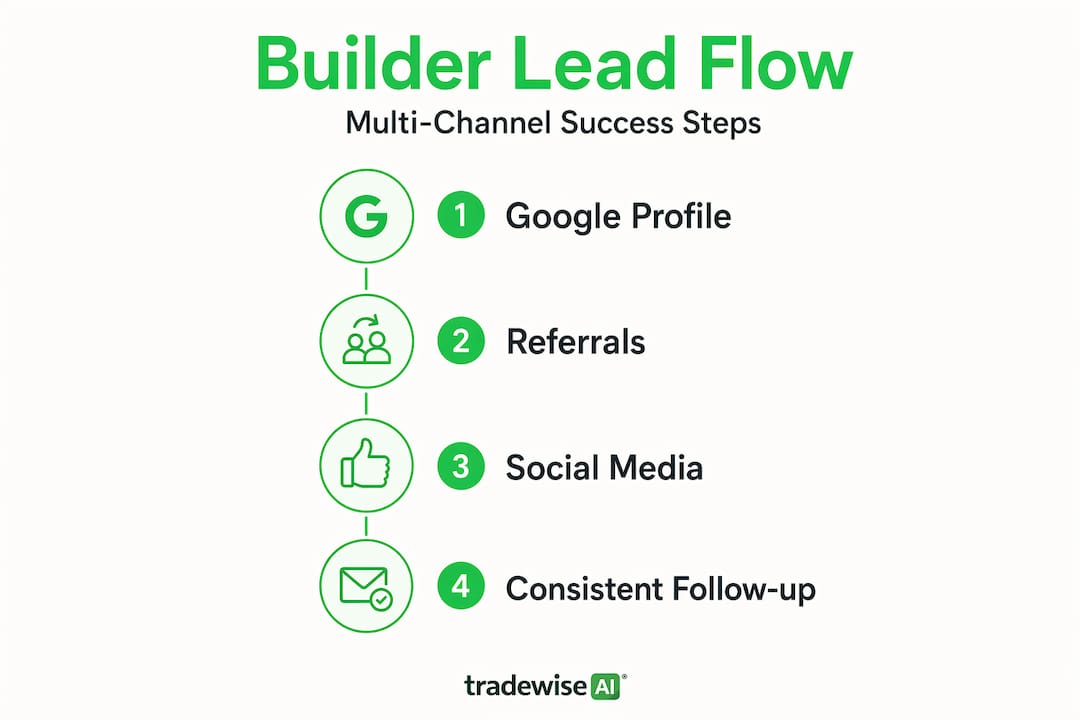
A single client acquisition channel is fragile. If Google changes its algorithm or a directory increases its fees, your lead flow disappears overnight. Builder marketing strategies that work long-term always combine two or three complementary sources. The framework that produces the most consistent results involves a backbone intelligence source combined with one active digital channel.
The backbone can be permit tracking. In the UK, planning applications are publicly available through local authority portals. AI permit tracking tools now scan these in real time and alert you when a new application is filed in your area. The critical insight here is speed. By the time a lead appears in a commercial database, the homeowner has already spoken to several contractors. First-mover advantage is not a marginal benefit. It is the difference between winning and not being in the conversation at all.
Your digital amplifier channel should match your capacity. If you have time to create content, SEO is the best long-term play. If you need results within 60 days, Google Ads targeting specific local search terms will generate enquiries faster. LinkedIn works well for commercial builders and developers.
Once the lead comes in, most builders do nothing after the initial estimate. That is where deals are lost. A six-touch follow-up cadence over six weeks lifts close rates from 20 to 25% to 30 to 40%.
| Day | Action | Purpose |
|---|---|---|
| Day 1 | Confirmation message | Acknowledge receipt, set expectations |
| Day 3 | Add value | Share a relevant case study or project photo |
| Day 7 | Soft urgency | Mention your diary filling up for the season |
| Day 14 | Address concerns | Ask if they have questions about the quote |
| Day 21 | Direct check-in | "Are you still considering going ahead?" |
| Day 42 | Polite closure | Leave the door open without pressure |
Most builders follow up once, hear nothing, and move on. The data says five contacts per lead is the minimum for meaningful conversion improvement. You need a system to make this happen consistently, not willpower.
Pro Tip: Use a simple CRM or even a shared spreadsheet to track every open estimate. Log the date it was sent and schedule your follow-ups in advance. Treat each follow-up as a task with a deadline, not an optional call you might make.
Combining three to four lead generation methods with consistent follow-up over a 12-month period is what separates builders who grow steadily from those who experience feast and famine cycles. Commit to your channels for at least a year before judging their effectiveness.
Beyond Google: community presence and social media
Google is not the only place clients look for builders. Platforms like Nextdoor, local Facebook groups, and Instagram play an increasingly important role in how to get construction clients, particularly in residential markets where trust is everything. These platforms reward authentic engagement far more than polished advertising.
The approach that works is contribution, not promotion. Join three or four local Facebook groups and Nextdoor communities in your target area. When someone posts asking for a builder recommendation, respond with your details and a link to recent work. When someone asks a question about planning permission or foundation types, answer it helpfully. Over time, you become the builder people associate with expertise and reliability in that community.
Here is how to build an effective social media presence as a builder:
- Post before-and-after photos of completed projects with brief descriptions of the work
- Share short clips of interesting details: a tricky structural solution, a custom feature, a complex roof
- Ask happy clients if you can tag them or quote them in a post
- Cross-post your GBP updates to Instagram and Facebook to maximise reach for minimal extra effort
- Respond to every comment and message promptly. Silence signals disinterest
Authentic local engagement consistently generates organic leads without paid advertising costs. The builders who use community platforms purely to drop their phone number and move on get nothing. The ones who contribute and demonstrate knowledge build a visible reputation that compounds over months.
Instagram works particularly well for showcasing quality finishes, extensions, and renovations to a local audience. A well-composed photo of a completed kitchen extension will reach homeowners in your area if you use location tags and local hashtags consistently. It is a long game, but the cost is essentially zero and the leads it generates are already warm.
My honest take on what actually works
I've spoken with enough UK builders to see a clear pattern. The ones struggling to find new clients are not lacking in skill or work ethic. They are running their client acquisition on autopilot and wondering why the phone is quiet.
What I've consistently seen undervalued is the Google Business Profile. Builders set it up once, never touch it again, and then wonder why a competitor with half their experience ranks above them locally. The competitor posts twice a week and has 40 more reviews. That is the entire explanation.
The follow-up issue is even more uncomfortable. I've seen builders send an excellent quote, wait two weeks, hear nothing, and conclude the client went elsewhere. Often they hadn't. They were waiting for a nudge, a bit of reassurance, or just a reply that showed the builder actually wanted the work. Losing that job costs you five times more than sending a polite follow-up message would have.
My honest recommendation: before you spend a pound on paid advertising, own your GBP, build a referral system, and install a follow-up process. Those three things alone, done consistently, will outperform most paid channels for the majority of small to medium UK builders. For deeper lead generation systems, there is solid reading worth exploring once your foundation is solid.
Treat client acquisition as an operational priority, not something you attend to between jobs. The builders I've seen grow fastest schedule time each week for outreach, review management, and follow-up. It is not glamorous. It works.
— Mateusz
How Tradewisehq helps you manage and convert leads
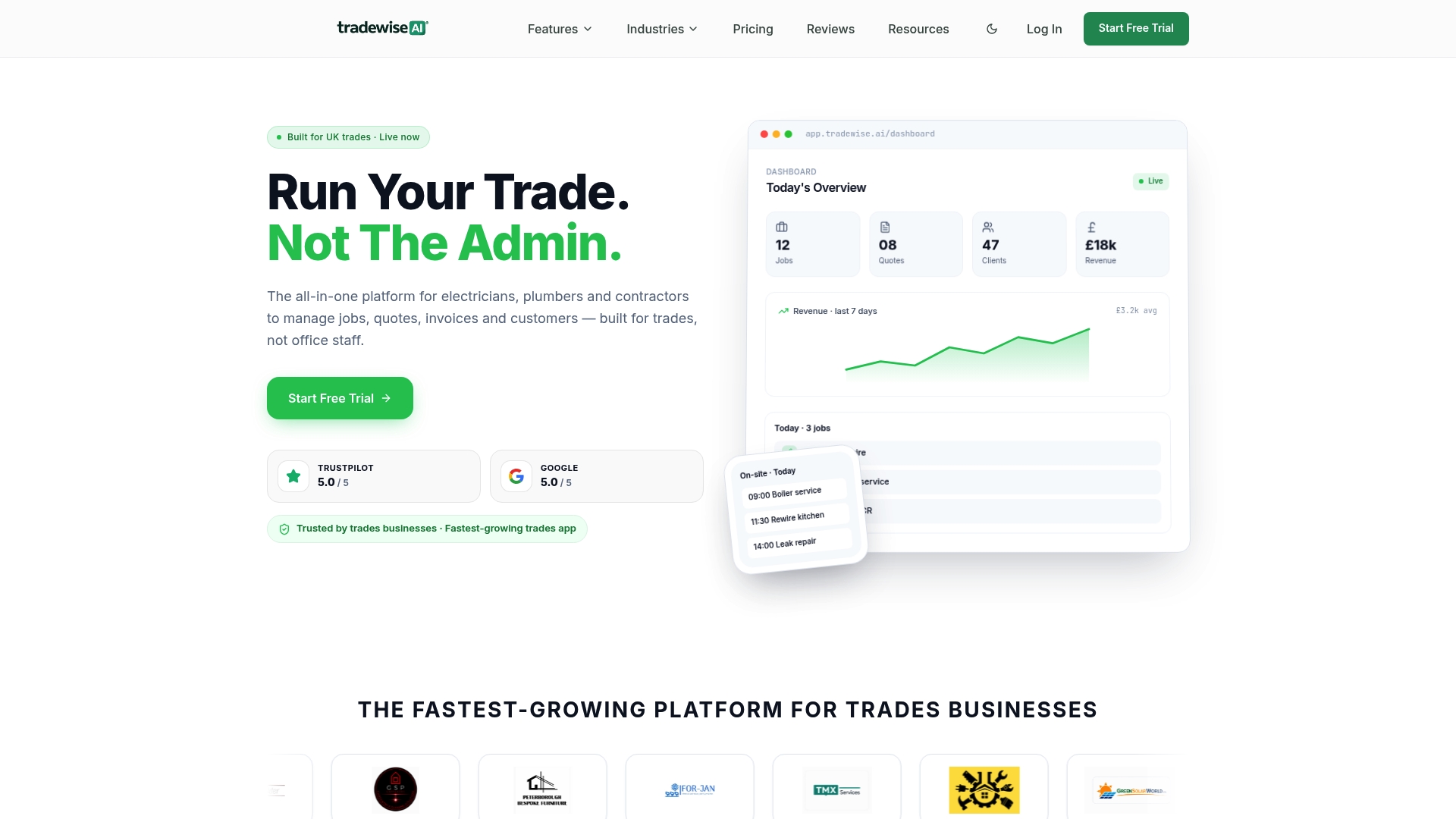
Knowing the strategies is one thing. Executing them consistently while running live jobs is another. Tradewisehq is built for exactly this situation. The platform lets you track every enquiry from first contact through to signed contract, automate follow-up sequences so nothing slips through, and manage client communication alongside your quotes, scheduling, and invoicing. You do not need separate tools for each part of your business.
If you are serious about growing your client base without hiring an office manager or a marketing agency, Tradewisehq's trade management platform is worth exploring. It puts your lead pipeline, job management, and client communications in one place, accessible from your phone on site.
FAQ
What is the fastest way for a builder to get new clients?
Optimising your Google Business Profile with recent photos and actively requesting reviews is the fastest no-cost method. Combining this with a prompt follow-up on every estimate enquiry produces results within weeks.
How many follow-up messages should a builder send after a quote?
A six-touch follow-up over 42 days is the recommended approach. Close rates improve from 20-25% to 30-40% when builders use a structured multi-contact sequence rather than a single chase message.
Do referral programmes really work for builders in the UK?
Yes, and they work better than most paid channels. Asking within 24 to 48 hours of a project milestone, combined with a two-way incentive at 30 to 60 days, creates a repeatable referral system rather than a lucky windfall.
Which social media platform is best for UK builders?
Instagram is best for residential work due to its visual nature and local reach through hashtags and location tags. Facebook local groups and Nextdoor are more effective for generating direct enquiries through community engagement.
How long does it take for a Google Business Profile to generate leads?
Most builders see measurable improvement in local enquiries within four to eight weeks of consistent activity, provided they are posting regularly, collecting reviews, and have their service listings fully populated.