

Real-time job tracking sits at the heart of how modern construction projects stay on schedule, on budget, and out of dispute. Yet most site managers still treat it as an administrative chore rather than the operational tool it actually is. The role of live job tracking in construction goes well beyond filling in daily sheets. Done properly, it closes the gap between what is happening on site and what the project manager knows about it, often within hours rather than days. This guide covers what effective construction job tracking looks like, why it matters, and how to make it work consistently on UK sites.
Table of Contents
- Key takeaways
- The role of live job tracking in construction
- Why real-time updates improve efficiency and accountability
- Common pitfalls in construction job tracking
- Choosing tools for live tracking in construction
- Applying live tracking best practices on UK sites
- My honest view on live tracking after years on site
- How Tradewisehq supports live job tracking on your site
- FAQ
Key takeaways
| Point | Details |
|---|---|
| Live tracking is not just reporting | Effective job tracking requires closed-loop action, not merely capturing data into folders. |
| Contemporaneous records are legally critical | Entries done weeks late lose evidential value rapidly in disputes and payment claims. |
| Two rhythms drive success | Daily field captures combined with weekly synthesis meetings convert raw data into real decisions. |
| Photo evidence must be embedded | Photos linked directly to daily reports with metadata are far more defensible than loose image folders. |
| Technology enforces completeness | Software with required fields and GPS verification prevents gaps at the point of capture, not after. |
The role of live job tracking in construction
Live job tracking, known in formal project management circles as real-time field monitoring, is the continuous process of capturing, recording, and acting on site data as events unfold. It is not the same as end-of-week reporting. The distinction matters because a problem identified on Tuesday afternoon can be resolved by Wednesday morning. The same problem discovered during Friday's report review carries two days of compounding delay.
UK construction progress reports provide structured snapshots covering work completed, delays, and live issues, and are typically issued weekly for short updates and monthly for full contract-cycle reports. When risk escalates, that frequency increases. That escalation principle is the core logic of live tracking: the more volatile the situation, the tighter the reporting loop needs to be.
Effective live tracking captures several data streams simultaneously:
- Daily site diary entries recording weather conditions, labour on site, plant and materials delivered, and work completed
- Real-time field reports with photo and location tagging tied to specific tasks or areas
- Delay and variation logs capturing causes, durations, and responsible parties
- Material and subcontractor records linked to programme activities
- Safety and quality observations with photographic evidence attached
The critical word here is contemporaneous. Diary entries made three days late carry significantly less weight in a dispute. Entries made three weeks after the fact are nearly worthless as evidence. Live tracking is therefore both a management practice and a legal safeguard.
Pro Tip: Set a hard cut-off time for daily diary submission, for example 17:00, and use software that prevents submission without mandatory fields completed. This removes the "I'll fill it in tomorrow" habit before it starts.
Why real-time updates improve efficiency and accountability
The most persuasive case for construction site performance tracking is not philosophical. It is financial. Closing the latency gap using live field data allows UK project managers to address issues the same day they arise, protecting both programme and margin.
Consider a scenario where a mechanical subcontractor falls behind on first-fix pipework. Without live tracking, the electrical team arrives on schedule and finds they cannot proceed. Two days of standing time accumulate before the programme is formally revised. With live tracking, the delay is logged the afternoon it becomes apparent, the electrical team is rescheduled that evening, and the knock-on cost is contained.
"The biggest failure in construction monitoring is not the absence of data capture. It is the failure to trigger corrective actions from the data that does exist."
Beyond programme management, real-time construction updates create a layer of accountability that changes behaviour on site. When supervisors know their daily records feed directly into a visible project dashboard, the quality and accuracy of those records improves. Accountability is not just about catching problems. It is about creating conditions where fewer problems occur in the first place.
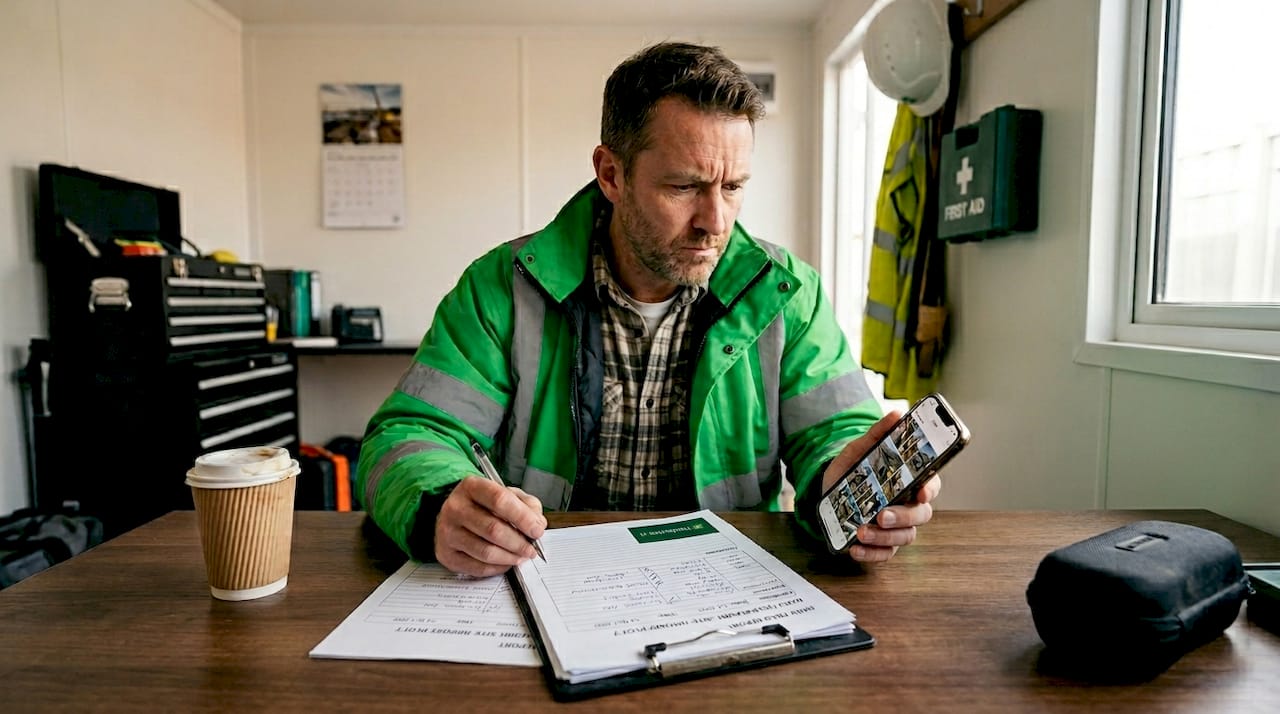
The documentation benefits are equally significant. Audit-ready field reports with GPS-verified timestamps and supervisor sign-off routing provide defensible evidence for payment applications, variation claims, and contract disputes. On a typical UK commercial project, the difference between a well-documented extension of time claim and a poorly documented one can run into tens of thousands of pounds.
Common pitfalls in construction job tracking
Knowing the benefits of job tracking is one thing. Getting it to work consistently on a live site is another. Several failure patterns appear repeatedly across UK construction projects.
-
Inconsistent ownership. When nobody is explicitly responsible for daily data capture, it defaults to whoever has time, which is usually nobody. Every site needs a named person accountable for each reporting stream, whether that is the site manager, foreman, or section supervisor.
-
Open-loop systems. Photos and reports filed into folders nobody opens generate no value. Data capture without a defined action pathway is not monitoring. It is archiving. Every issue logged must have a resolution pathway attached.
-
Fragmented data. When weather logs live in one spreadsheet, labour records in another, and photos in a WhatsApp group, synthesis becomes a manual task that rarely happens. Fragmentation is the enemy of real-time insight.
-
Retrospective completion. Supervisors who complete a week's diaries on Friday afternoon are not doing live tracking. They are reconstructing events from memory, which introduces inaccuracy and removes the operational value entirely.
-
Frequency mismatches. Using the same reporting cadence during a complex steel erection phase as during groundworks preparation ignores the reality that risk varies across project stages.
Overcoming these pitfalls requires structural solutions, not motivational ones. Consistent daily reports with clear supervision ownership and defined processes to close the loop on raised issues are the three pillars of a functioning system.
Pro Tip: Run a five-minute end-of-day stand-up with your site team to verbally confirm what has been logged. This catches gaps before the day closes and reinforces the habit without adding paperwork.
Choosing tools for live tracking in construction
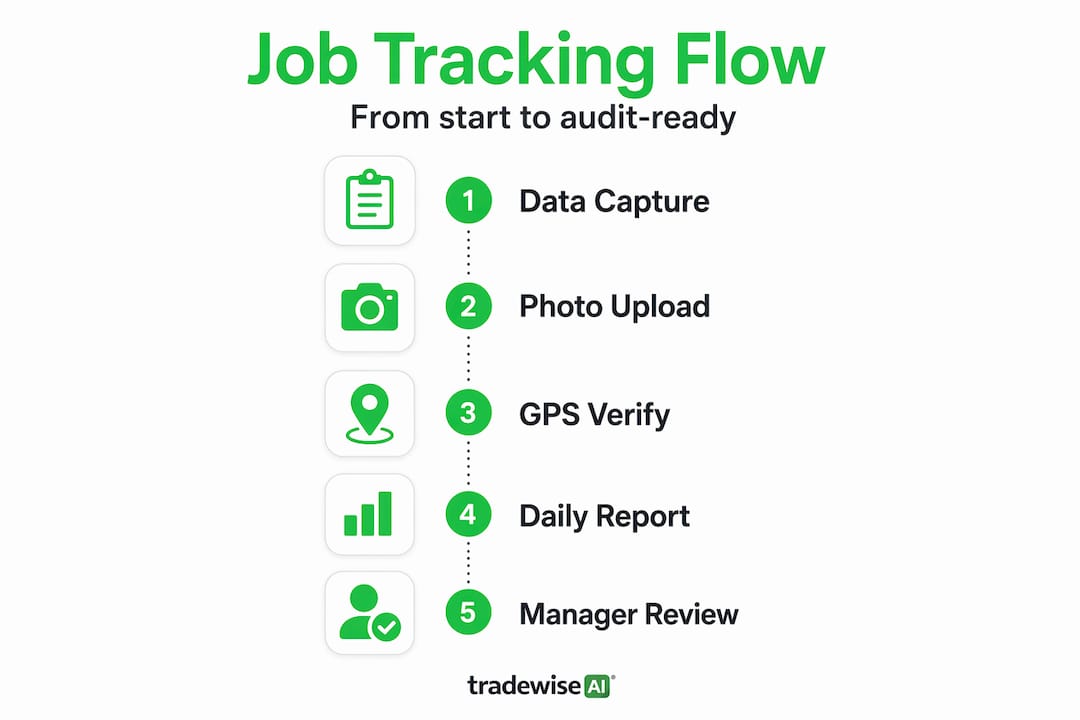
The right construction management tools do not just store data. They enforce completeness, verify location, and surface issues before they become problems. When evaluating software for live tracking in construction, these are the features that separate genuinely useful platforms from glorified spreadsheets.
| Feature | Why it matters |
|---|---|
| Geofencing and GPS time verification | Confirms labour is recorded against actual work locations, reducing payroll disputes and improving cost attribution |
| Photo tagging linked to daily records | Embeds images with metadata directly into reports rather than storing them separately |
| Required fields and validation rules | Prevents incomplete submissions at the point of capture rather than requiring retrospective correction |
| Real-time progress dashboards | Gives project managers and supervisors a live view of site status without waiting for reports to be compiled |
| Integration with programme software | Connects field data to the master programme so deviations are visible immediately |
Location-verified time tracking using geofencing reduces payroll disputes and creates accurate labour cost records tied to specific work areas. On multi-trade sites, this level of granularity is the difference between knowing where your budget is going and guessing.
Photo documentation deserves particular attention. Embedding photos directly within daily reports with date, location, and author metadata creates far more defensible evidence than a shared drive of unnamed images. When a claim arises six months later, a report with embedded, timestamped photos tells a clear story. A folder of JPEGs does not.
Software that enforces data completeness through required fields and immediate submission prevents errors at source rather than requiring correction later. This is the difference between a system that supports good practice and one that depends on it.
Applying live tracking best practices on UK sites
Knowing what to track and having the right tools still leaves the question of how to embed live project monitoring as a consistent daily practice rather than an occasional exercise.
The most effective approach anchors tracking on two distinct rhythms. Daily field captures for site staff keep the data current. Weekly synthesis meetings for project managers convert that data into decisions. Without both, the system either lacks current information or lacks the structured review that turns information into action.
Practical steps for embedding this on a UK site include:
- Assign reporting roles explicitly. Name the person responsible for each data stream in the project execution plan, not just verbally.
- Set non-negotiable submission windows. Daily diaries submitted by 17:00, weekly summaries by noon on Friday. Deadlines create habits.
- Use photo evidence purposefully. Photograph progress at consistent reference points so comparisons across weeks are meaningful, not random.
- Escalate frequency proactively. When a subcontractor starts slipping or weather conditions deteriorate, increase reporting frequency before the situation becomes critical.
- Review the dashboard before morning briefings. A two-minute check of overnight submissions before the 08:00 site meeting means you walk into that meeting informed rather than reactive.
Pro Tip: Create a simple weekly one-page summary that pulls the key metrics from your daily reports. Distributed to the client and design team on Monday morning, it replaces three ad-hoc update calls and positions you as the most organised person on the project.
My honest view on live tracking after years on site
I have worked on projects where live tracking was treated as a contractual obligation and projects where it was treated as a genuine management tool. The difference in outcomes was not subtle.
What I have learnt is that the checklist is never the problem. The problem is always the loop. I have seen sites with meticulous daily diaries where nothing ever changed because nobody was tasked with reading them. The data sat in a folder, the issues sat on site, and the claim sat in dispute for eighteen months.
What actually changed my approach was embedding photos directly into reports rather than keeping separate albums. When a photo lives inside a dated, signed diary entry, it becomes evidence. When it lives in a folder labelled "site pics March," it becomes a liability in the wrong hands.
I also found, counterintuitively, that increasing report frequency during difficult phases reduced stress rather than adding to it. When conditions worsen, the instinct is to focus on the physical work and let the paperwork slip. That is exactly backwards. More frequent, shorter captures during a challenging phase give you the data to defend your position and the visibility to respond faster.
Leadership ownership is the final piece. If the project manager does not review the daily reports, the site team stops taking them seriously within a fortnight. Tracking culture flows from the top, every time.
— Mateusz
How Tradewisehq supports live job tracking on your site
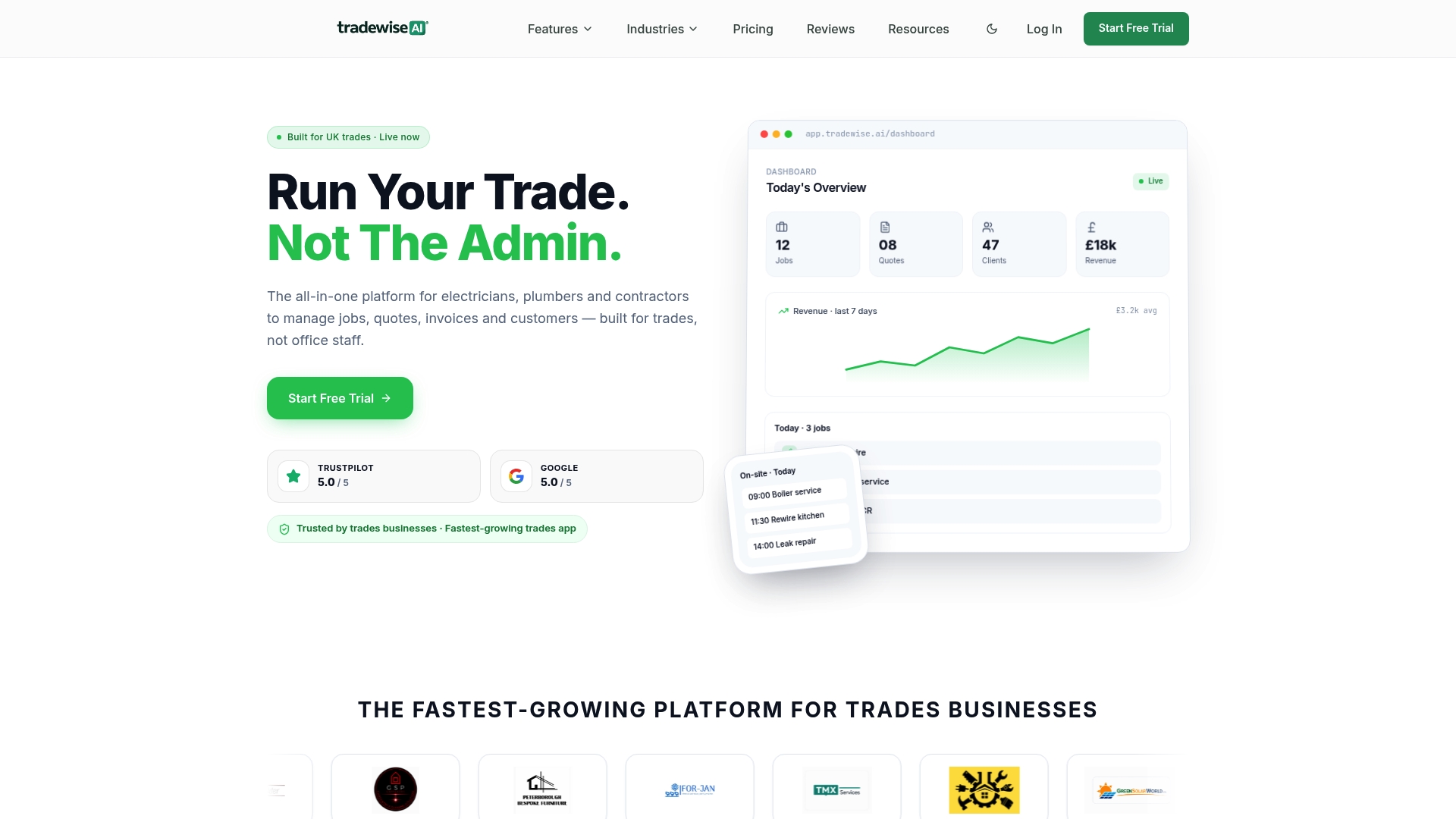
If the principles in this article resonate but the implementation feels complex, Tradewisehq is built for exactly this challenge. The platform gives UK site managers and project managers location-verified job tracking with geofencing, photo documentation embedded directly into job records, and real-time workforce syncing across the whole site team. Required fields and automated validations mean your daily records are complete at the point of capture, not patched together on Friday afternoon. Whether you manage a single site or coordinate multiple crews, Tradewisehq brings your field data, labour records, and job updates into one mobile-first platform. You can explore how it works at tradewisehq.com.
FAQ
What does live job tracking in construction actually involve?
Live job tracking covers the continuous capture of site data including labour, progress, delays, photos, and materials as events happen, not retrospectively. It requires both daily field inputs and a defined process for acting on the information collected.
How often should site diaries be completed?
Daily, and always on the same day. Entries completed days later lose significant credibility as evidence in disputes or payment claims, making contemporaneous completion a professional and contractual necessity.
What is the biggest reason live tracking fails on construction sites?
Inconsistent ownership and open-loop systems are the most common causes. Data is captured but never reviewed, or nobody is named as responsible for specific reporting streams, so the habit breaks down quickly.
What features should I look for in construction job tracking software?
Prioritise GPS-verified time capture, photo tagging linked to daily records, required field validation, and real-time dashboards. These features enforce completeness at source and give you audit-ready records without manual chasing.
Does live tracking help with payment and variation claims?
Significantly. Audit-ready field reports with GPS timestamps, embedded photos, and supervisor sign-off provide the contemporaneous evidence needed to support extension of time claims, variation instructions, and payment applications under UK contract conditions.