
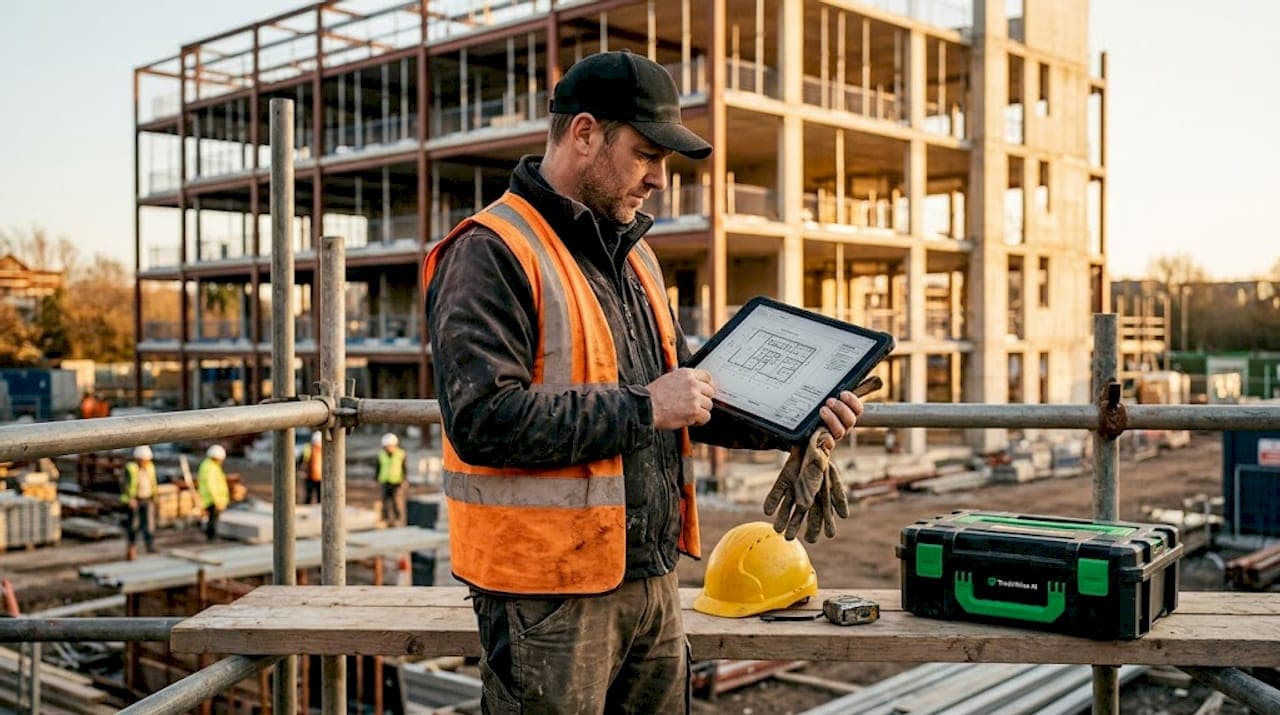
AI is no longer a distant concept for UK builders. The role of AI tools for builders has shifted from experimental novelty to a practical necessity, driven by mounting labour shortages, rising material costs, and the relentless pressure to deliver projects on time and on budget. The misconception that AI simply replaces skilled tradespeople misses the point entirely. What these tools actually do is give builders sharper data, faster decisions, and fewer costly surprises. This article cuts through the noise to show you exactly where AI delivers real value on UK building sites today.
Table of Contents
- Key takeaways
- The role of AI tools for builders: where the UK market stands
- AI in building design and planning
- AI on site: cost management and productivity
- Overcoming the real challenges of AI adoption
- The future of building: what AI means for your profession
- My honest take on AI for UK builders
- How Tradewisehq helps builders put AI to work
- FAQ
Key takeaways
| Point | Details |
|---|---|
| AI adoption is accelerating | Over 76% of construction leaders have increased AI investment, making early adoption a competitive advantage. |
| Design efficiency gains are measurable | AI tools reduce design iteration from days to minutes, cutting rework and improving schedule adherence. |
| Site monitoring transforms safety | Computer vision and sensors automate hazard detection, improving compliance and incident response on site. |
| Embedded AI beats standalone tools | AI built into your existing project management system protects data security and avoids workflow fragmentation. |
| Builders become strategic curators | The builder's role shifts toward evaluating and directing AI outputs, not being replaced by them. |
The role of AI tools for builders: where the UK market stands
The numbers tell a clear story. Over 76% of construction leaders have increased their AI investment, with adoption rising 9% year on year. That is not a trend confined to large contractors. Mid-size builders and specialist subcontractors across the UK are beginning to feel the competitive pressure to catch up.
The drivers behind this shift are not abstract. Labour shortages have made every skilled worker more valuable, which means anything that reduces wasted effort directly improves margins. Operating costs are up. Clients expect more transparency. Regulatory requirements around building safety, particularly following the Building Safety Act 2022, have added documentation and compliance burdens that AI technology for construction is well placed to address.
The main categories of AI tools builders are using today include:
- Site monitoring and safety. Camera and sensor systems that use computer vision to flag hazards and track productivity in real time.
- Project management and reporting. Platforms with embedded AI that automate progress tracking, document handling, and cost forecasting.
- Design and coordination assistance. AI tools integrated into CAD and BIM environments that catch clashes, check compliance, and generate design options.
- Estimating and takeoffs. Automated quantity measurement tools that cut the time spent on manual calculations.
The UK construction sector has historically been slow to adopt new technology, but the combination of cost pressure and a new generation of builders comfortable with digital tools is changing that calculus quickly.
AI in building design and planning
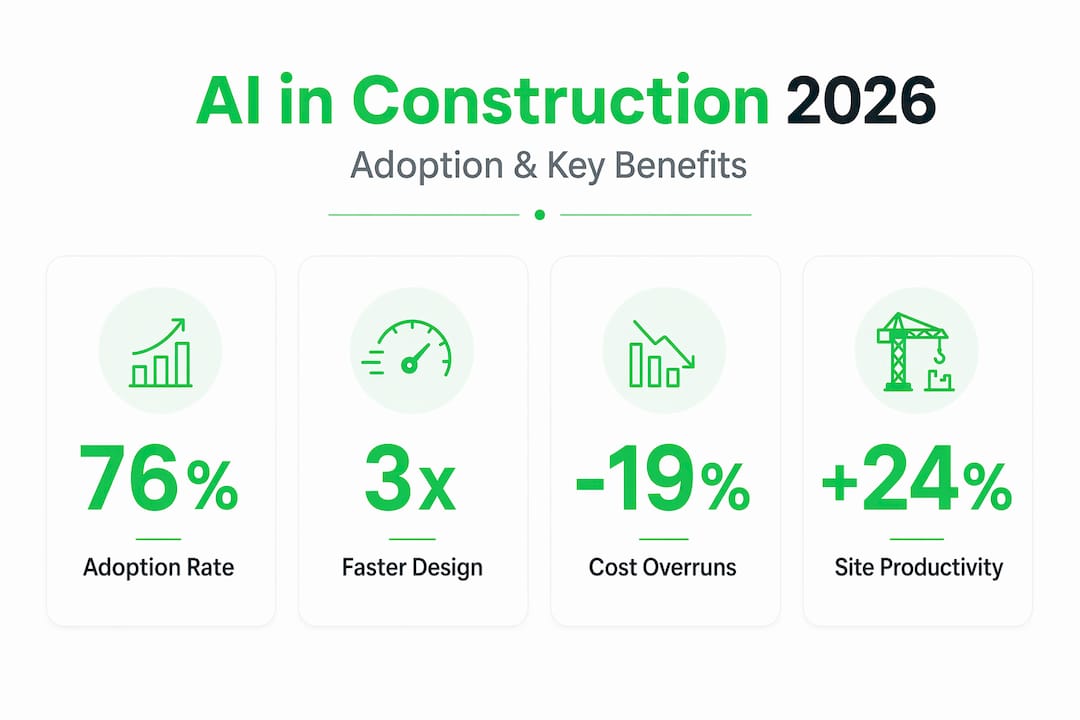
One of the most tangible benefits of AI in building design is the speed at which you can explore options. Cloud-native AI platforms reduce design iteration from days to minutes, which matters enormously when a client changes their mind or a planning condition requires a rethink. Instead of a draughtsperson spending two days redrawing a floor plan, an AI-assisted tool can generate multiple compliant variants in an afternoon.
The coordination side is equally significant. AI-powered coordination software catches clashes and compliance issues during the design phase, well before anyone has broken ground. A structural element clashing with a mechanical duct is a minor inconvenience on screen. On site, it is a delay, a cost, and a headache for everyone involved.
| Traditional approach | AI-assisted approach |
|---|---|
| Manual clash detection during site meetings | Automated clash detection during design development |
| Compliance checked by consultant at end of design | Continuous compliance screening throughout design |
| Design revisions take days | Design iterations generated in minutes |
| Rework discovered on site | Issues resolved before construction begins |
What this means for builders is that you arrive on site with a cleaner set of information. Fewer surprises. More confidence in the programme. The builder's role here is not to become a software operator but to understand what the AI is checking and to apply professional judgement when it flags something unexpected.
Pro Tip: When reviewing AI-generated design options or clash reports, treat the output as a first draft, not a final answer. Your site experience and knowledge of local conditions will always catch things the algorithm cannot.
AI on site: cost management and productivity
The benefits of AI for builders become most visible when the tools move from the office to the site. AI-driven site monitoring using cameras, sensors, and computer vision automates safety and productivity tracking, identifying hazards and bottlenecks faster than any manual inspection regime. A camera system that flags an operative working without the correct PPE in real time is not replacing your site manager. It is giving them better information to act on.
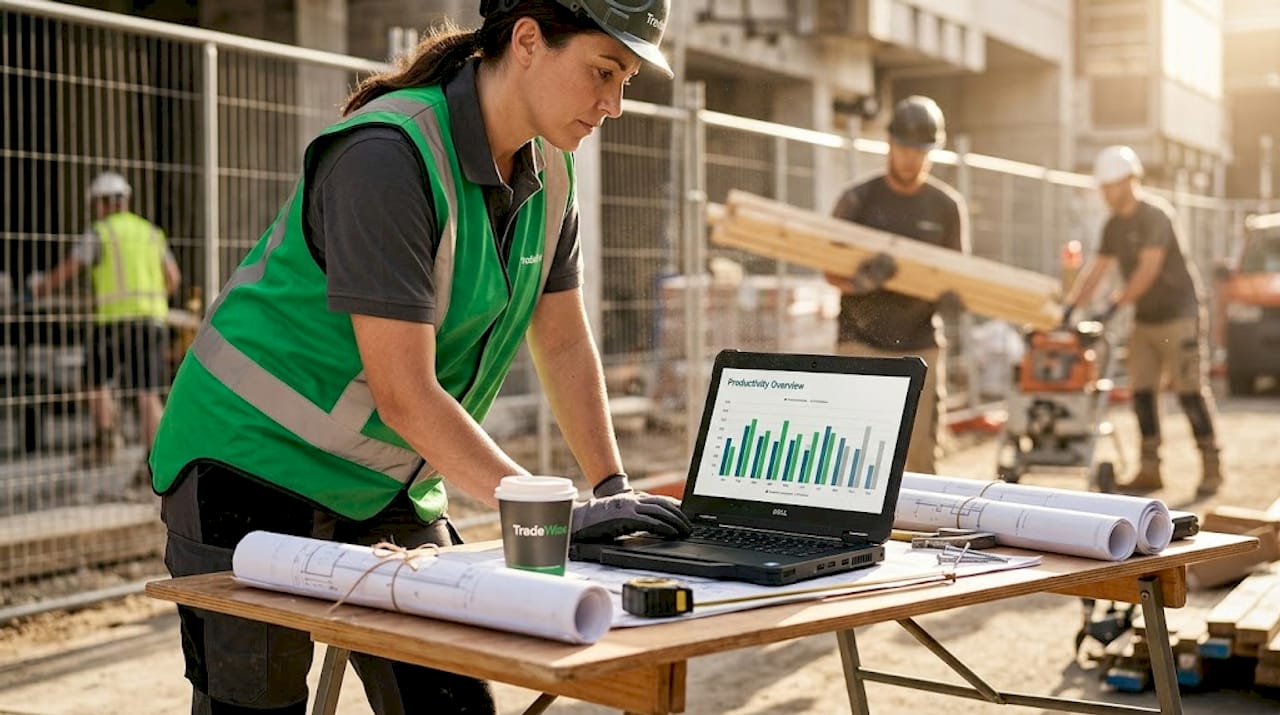
On the cost management side, the gains are substantial. AI tools like Framework save construction teams over 14 hours per week by automating document analysis, takeoffs, estimates, and reporting. For a small to mid-size building firm, that is the equivalent of recovering nearly half a working week per person, every week.
Practical applications worth considering for UK building sites include:
- Automated quantity takeoffs. AI reads drawings and generates material quantities in a fraction of the time, reducing estimating errors and speeding up tender submissions.
- Supply chain visibility. AI solutions for construction projects can flag material delivery risks early, giving you time to source alternatives before a shortage causes a programme delay.
- Predictive cost forecasting. Platforms that analyse historical project data to flag budget risks before they become overruns.
- Incident and near-miss logging. Automated reporting tools that capture safety data without relying on manual paperwork at the end of a long shift.
Proactive AI coordination screening during design development also avoids expensive resubmittal cycles, which is a cost saving that often goes unmeasured but adds up significantly over a year's worth of projects.
Pro Tip: Start with one AI tool that addresses your biggest current pain point, whether that is estimating accuracy or site safety reporting. Prove the value there before expanding. Adoption that is too broad, too fast, tends to create confusion rather than efficiency.
Overcoming the real challenges of AI adoption
The challenges builders face in adopting AI tools are rarely about the technology itself. They are about integration, trust, and discipline.
The most common mistake is accumulating disconnected AI tools that each solve one narrow problem but do not talk to each other. You end up with data scattered across platforms, staff logging into multiple systems, and a workflow that is more fragmented than before. Embedded AI within project management platforms solves this by keeping AI capabilities inside the system where your project data already lives, protecting security and maintaining a single source of truth.
Data governance is a genuine concern on construction projects. Drawings, contracts, cost plans, and subcontractor information are commercially sensitive. Before adopting any AI tool, ask the provider directly where your data is stored, who can access it, and whether it is used to train their models.
A phased approach to adoption tends to work best:
- Identify a specific problem. Vague goals produce vague results. Define what you want to improve: estimating time, safety incident rates, programme accuracy.
- Evaluate tools against that goal. Disciplined AI adoption focused on project goals produces higher return on investment than chasing every new feature.
- Pilot on one project. Test the tool in a controlled environment before rolling it out across your business.
- Measure the outcome. If you cannot measure the improvement, you cannot justify the cost or the disruption.
- Expand with intention. Scale what works. Drop what does not.
"AI does not replace human expertise but closes the gap between intent and execution, making human judgement in engineering and design more vital than ever." Source
The builders who struggle with AI adoption are usually those who treat it as a technology project rather than a business improvement initiative. The tools are a means to an end, not the end itself.
The future of building: what AI means for your profession
The trajectory of how AI tools enhance construction points toward something more significant than faster reports or automated takeoffs. Agentic AI is emerging as the next architectural shift, capable of autonomously handling complex, multi-discipline problems across the full design-build-operate workflow. For builders, this means the tools will become more capable of managing coordination tasks end to end, not just flagging issues but proposing and implementing solutions within defined parameters.
What this requires from builders is a shift in how you think about your own skills. The most valuable capabilities going forward will not be the manual tasks that AI can automate. They will be:
- Strategic evaluation. Knowing which AI outputs to trust, which to question, and which to override based on site experience.
- Digital literacy. Understanding enough about how AI tools work to use them confidently and spot when they are producing unreliable results.
- Ethical oversight. Ensuring that AI-driven decisions on safety, resource allocation, and subcontractor management meet your professional and legal obligations.
- Client communication. Using AI-generated data to tell a clearer, more credible story to clients about project progress and cost.
Modern builders are transitioning from passive approvers to critical curators, directing AI-generated options and data rather than simply reviewing outputs. That is a more skilled role, not a lesser one. The vision of an integrative design-build-operate continuum powered by AI is one where builders sit at the centre of a more connected, more efficient, and ultimately more profitable industry.
My honest take on AI for UK builders
I have watched a lot of builders get excited about AI tools and then quietly abandon them three months later. The pattern is almost always the same. They adopt too many tools at once, the workflows do not connect, the team gets frustrated, and the whole thing gets written off as overhyped.
What I have learned is that the builders getting genuine value from AI are the ones treating it like any other piece of plant. You would not buy a new piece of equipment without knowing what job it does, how it fits into your site processes, and how you measure its output. AI tools deserve the same rigour.
The human judgement question matters more than most people admit. AI in building design does not make the creative and technical decisions. It shifts the role toward curation and strategic decision-making. That is actually a more demanding role, not an easier one. You need to know enough to evaluate what the tool is telling you.
My strongest recommendation is to favour embedded AI within platforms you already use over standalone point solutions. It keeps your data secure, reduces the cognitive load on your team, and produces better outcomes because the AI has access to the full context of your project rather than a fragment of it.
The builders who will thrive in the next decade are not the ones who adopt every new AI feature. They are the ones who adopt the right tools, use them with discipline, and apply their professional judgement to the outputs. AI is a powerful partner in that work. It is not the builder.
— Mateusz
How Tradewisehq helps builders put AI to work
If this article has made you think about where AI could genuinely improve your own projects, the next step is finding a platform that brings these capabilities together without adding complexity to your day.
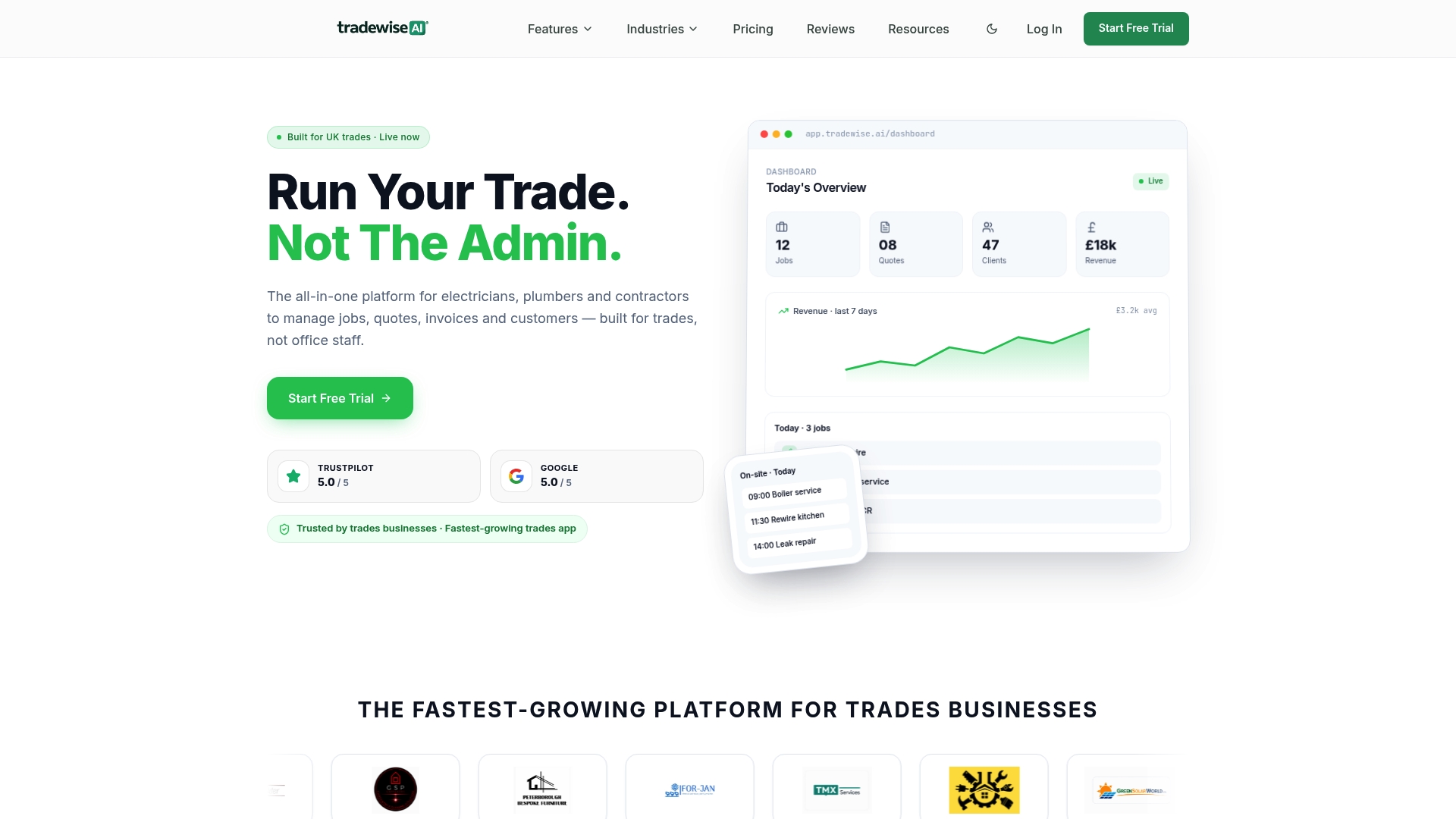
Tradewisehq is built specifically for tradespeople and builders who want AI working inside their existing workflows, not alongside them. From automated job management and scheduling to AI-assisted quotes, invoices, and client communication, Tradewisehq puts the benefits of AI for builders into a single mobile-first platform designed for the realities of UK building work. You get live workforce syncing, materials tracking, and intelligent automation without needing a dedicated IT team to manage it. If you are ready to see what disciplined, embedded AI looks like in practice, Tradewisehq is worth a close look.
FAQ
What is the role of AI tools for builders?
AI tools help builders improve project efficiency, reduce costly errors, automate repetitive tasks, and make better decisions using real-time data. They act as productivity and insight tools rather than replacements for skilled tradespeople.
How does AI improve safety on building sites?
AI-powered cameras and sensors use computer vision to automatically detect safety hazards and track compliance on site, flagging incidents faster than manual inspection and reducing the administrative burden of safety reporting.
What are the biggest risks of adopting AI tools in construction?
The main risks are workflow fragmentation from using too many disconnected tools, data security concerns around sensitive project information, and adopting AI without clear goals, which tends to produce confusion rather than efficiency gains.
How should builders start with AI tools?
Start by identifying one specific operational problem, such as estimating accuracy or programme management, and pilot a single tool against that goal. Measure the outcome before expanding adoption across your business.
Will AI replace builders and construction professionals?
No. AI shifts the builder's role toward strategic curation and oversight of AI-generated outputs, which requires deeper professional judgement, not less. The skills that matter most are evaluation, digital literacy, and the ability to apply site experience to AI-driven data.