

Winning builder contracts in the UK is defined by three factors: pre-tender credibility, bid precision, and contract control. Most builders lose work before they even submit a document, because procurement teams research suppliers on websites, LinkedIn, and Google Business Profiles long before formal evaluation begins. The Central Digital Platform (Find a Tender), JCT contracts, and framework bidding are the three pillars of a professional tender strategy. Get these right, and you stop chasing work and start being invited to bid for it.
How to win more builder contracts UK: start with digital credibility
Procurement teams pre-qualify suppliers by checking your digital presence before they ever open your bid document. Your website, Google Business Profile, and LinkedIn page are your first impression. If they look neglected, your tender goes in the bin regardless of your price.

The fix is straightforward. Publish case studies that match the type of work you want to win. A housing association looking for a refurbishment contractor wants to see completed refurbishment projects, not a generic portfolio. Align your content to buyer scope, and you become recognisable before the tender is even published.
Framework bidding makes this even more critical. Framework applications require marketing groundwork completed months before the application window opens. Buyers shortlist firms they already recognise. If you have not been producing content, attending industry events, or engaging on LinkedIn, you are invisible to the people who matter.
- Claim and optimise your Google Business Profile with recent project photos
- Publish at least two case studies per quarter, matched to your target sectors
- Post consistently on LinkedIn, focusing on project outcomes and client results
- Build a contractor SEO presence using long-tail keywords relevant to your trade and region
- Register on Constructionline, CHAS, or SafeContractor to signal compliance
Pro Tip: Treat your tender pipeline as a marketing funnel. Every piece of content you publish is a pre-qualification asset that works for you 24 hours a day.
Tender success is not just about bid quality. Consistent online presence and maintained client relationships are the overriding factors in whether you get invited to shortlists at all. Builders who understand this shift their thinking from reactive bidding to proactive positioning.
Which UK tender platforms should builders register on?
The Central Digital Platform (Find a Tender) is the official UK portal for all public sector building contracts above threshold. Registration is free and uses GOV.UK One Login with your Companies House number or equivalent. Once registered, you can set up alerts, manage submissions, and track opportunities in one place.
Here is a practical registration and targeting sequence for UK builders:
- Register on Find a Tender via GOV.UK One Login using your Companies House number
- Set keyword alerts for your trade, region, and project type
- Register on Constructionline or CHAS to satisfy pre-qualification requirements
- Identify two or three frameworks relevant to your capacity and speciality
- Contact framework owners directly to introduce your business before the next application window
Frameworks deserve special attention. They provide a sustained pipeline of work rather than a single contract. The trade-off is that framework applications attract 50–200 applicants for a dozen places. That means your pre-application marketing and case studies need to be aligned to the framework scope months in advance.
| Platform | Best For | Cost |
|---|---|---|
| Find a Tender (Central Digital Platform) | Public sector contracts above threshold | Free |
| Constructionline | Pre-qualification and framework access | Paid membership |
| CHAS | Health and safety accreditation for tenders | Paid membership |
| Local authority portals | Regional public sector work | Free |
SME builders should prioritise framework applications over chasing random open tenders. A place on a framework gives you repeat call-offs without the cost of repeated bidding. For learning how builders find new clients beyond public sector routes, a broader client acquisition strategy is worth developing alongside your tender activity.
How do you prepare a winning bid for UK construction contracts?
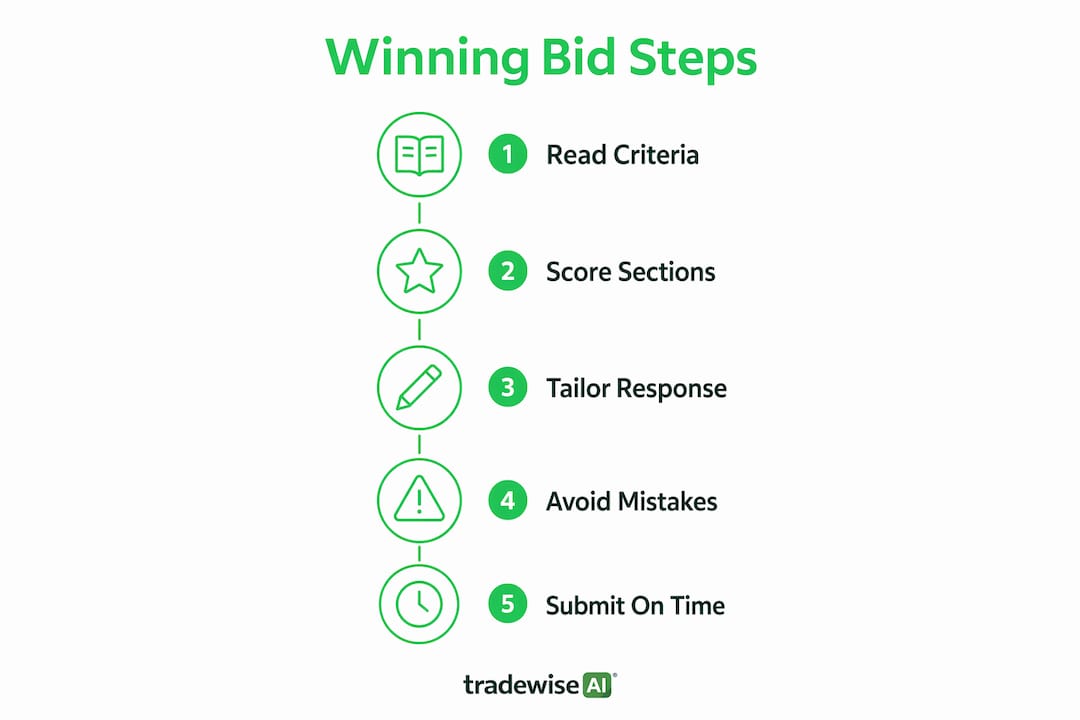
A winning bid passes the Pre-Qualification Questionnaire (PQQ) and then scores well across every evaluation criterion. Most builders focus on price. Evaluators focus on quality, Social Value, and evidence of delivery capability. Price is rarely the deciding factor on its own.
Passing the PQQ requires current accreditations, at least two relevant references, and clean financial accounts. If your accounts show poor cashflow or your accreditations have lapsed, you will be screened out before anyone reads your method statement.
- Include a clear scope of works with measurable deliverables and programme milestones
- Write a Social Value statement that references specific local employment or supply chain commitments
- Map your evidence directly to the evaluation criteria, not to what you think sounds impressive
- Price transparently with a breakdown, not a single lump sum
- Proofread for grammar and formatting, as presentation signals professionalism
Pro Tip: Read the evaluation criteria before you write a single word. Score each section against the weighting and allocate your effort accordingly. A 40% weighted quality section deserves 40% of your writing time.
Common bid mistakes that lower scores include vague method statements, generic Social Value boilerplate, and pricing that does not match the specification. Evaluators read hundreds of bids. Specificity stands out. Reference the client's own language from the tender documents back to them. It signals you have read and understood their requirements, not just submitted a recycled document.
What contract and payment terms protect UK builders?
Formal contracts are a commercial risk management tool, not a legal formality. JCT contracts suit complex or larger projects, while the FMB Minor Works Contract is better suited to simpler homeowner jobs in the £10,000–£50,000 range. Both cost around £30–£50 to purchase and protect both parties against scope creep, non-payment, and disputes.
| Contract Type | Best For | Typical Project Value |
|---|---|---|
| JCT Minor Works | Straightforward residential or commercial jobs | £10,000–£250,000 |
| JCT Standard Building Contract | Complex or multi-trade projects | £250,000 and above |
| FMB Minor Works Contract | Smaller homeowner jobs | £10,000–£50,000 |
Payment structure matters as much as the contract type. UK builder deposits typically range from 10%–25%, with staged payments tied to construction milestones. Deposits above 25% signal risk to clients and reduce your win rate. Tie your payment schedule to verifiable progress points such as foundations complete, first fix complete, and practical completion, rather than calendar dates.
Retention payments in UK contracts are typically 3%–5% of the contract value. Half is released at practical completion and the remainder after a 6–12 month defects liability period. Understanding this cycle is critical for cashflow planning, particularly on projects where retention represents a significant sum.
Variation control is where most builders lose margin. A disciplined change order process requires written authorisation before any additional work begins. Verbal agreements lead to disputes. Every variation should include a description of the change, the agreed price, and a signature from the client before you lift a tool. For a deeper look at construction contract types and which suits your project tier, it is worth reviewing the full range of options available.
Pro Tip: Use a simple variation log on every project. Date, description, agreed price, client signature. It takes two minutes and has saved builders thousands in disputed payments.
What are the most common bidding mistakes UK builders make?
The most common reason builders lose tenders is not price. The major cause of tender losses is lack of pre-tender visibility. The best contractors are invited because procurement managers already trust them. If you are not on the radar before the tender drops, you are competing at a disadvantage from the start.
Here are the most frequent errors and how to correct them:
- Chasing irrelevant tenders. Bidding on contracts outside your capacity or sector wastes time and lowers your win rate. Set clear criteria for which tenders you will and will not pursue.
- Submitting generic bids. Recycled method statements and boilerplate Social Value responses score poorly. Every bid needs to reference the specific client and project.
- Vague contract terms. Contracts without clear scope definitions, variation procedures, and payment milestones create disputes. Use a standard form contract on every job.
- Excessive upfront deposits. Asking for more than 25% upfront reduces client confidence and your chances of winning private work.
- No bid tracking system. Without a record of what you have bid, when, and the outcome, you cannot identify patterns or improve your success rate.
"The builders who win consistently are not the cheapest. They are the most visible, the most prepared, and the most organised when it comes to contracts and payments."
Trade management software helps address points four and five directly. Tracking bids, storing contract documents, and managing payment schedules in one place removes the administrative burden that causes many builders to cut corners. For practical guidance on job costing for contractors, accurate costing at bid stage is the foundation of profitable contract execution.
Key takeaways
Winning more building contracts in the UK requires pre-tender credibility, targeted platform use, precise bid preparation, and disciplined contract management working together.
| Point | Details |
|---|---|
| Build digital credibility first | Procurement teams research your website and LinkedIn before evaluating your bid. |
| Register on Find a Tender | The Central Digital Platform is free and the gateway to all public sector contracts. |
| Prioritise framework applications | Frameworks provide sustained pipelines and reward pre-application marketing investment. |
| Use formal contracts on every job | JCT or FMB contracts protect your margin, cashflow, and client relationships. |
| Control variations in writing | Written change orders with client signatures prevent margin erosion and disputes. |
The part most builders get wrong
I have spoken with dozens of UK builders who are technically excellent but consistently lose tenders to firms with weaker track records. The pattern is almost always the same. They treat bidding as a document exercise rather than a relationship and reputation exercise.
The builders who win frameworks year after year are not necessarily the best on site. They are the ones who have been showing up consistently online, attending pre-market engagement events, and building relationships with framework managers long before the application opens. That groundwork is invisible in the final bid document, but it is the reason they get invited in the first place.
Contract management is the other area where I see good builders lose money they have already earned. A verbal agreement to do extra work is not a contract. I have seen builders complete thousands of pounds of additional work on a handshake, only to face a client who disputes the cost at final account. A simple variation log costs nothing and protects everything.
Technology is closing the gap between large contractors and smaller builders. Tools like Tradewisehq give smaller firms the same bid tracking, contract management, and payment scheduling capabilities that larger contractors have had for years. The builders who adopt these tools now will have a compounding advantage over those who are still managing everything on spreadsheets and paper.
Patience matters too. Framework applications take months to bear fruit. Digital credibility builds over quarters, not weeks. The builders who stay disciplined and consistent are the ones who find themselves being invited to bid rather than scrambling to find the next job.
— Mateusz
Manage your bids and contracts with Tradewisehq
Winning the contract is only half the job. Delivering it profitably requires organised bid tracking, clear contract documentation, and payment schedules that protect your cashflow.
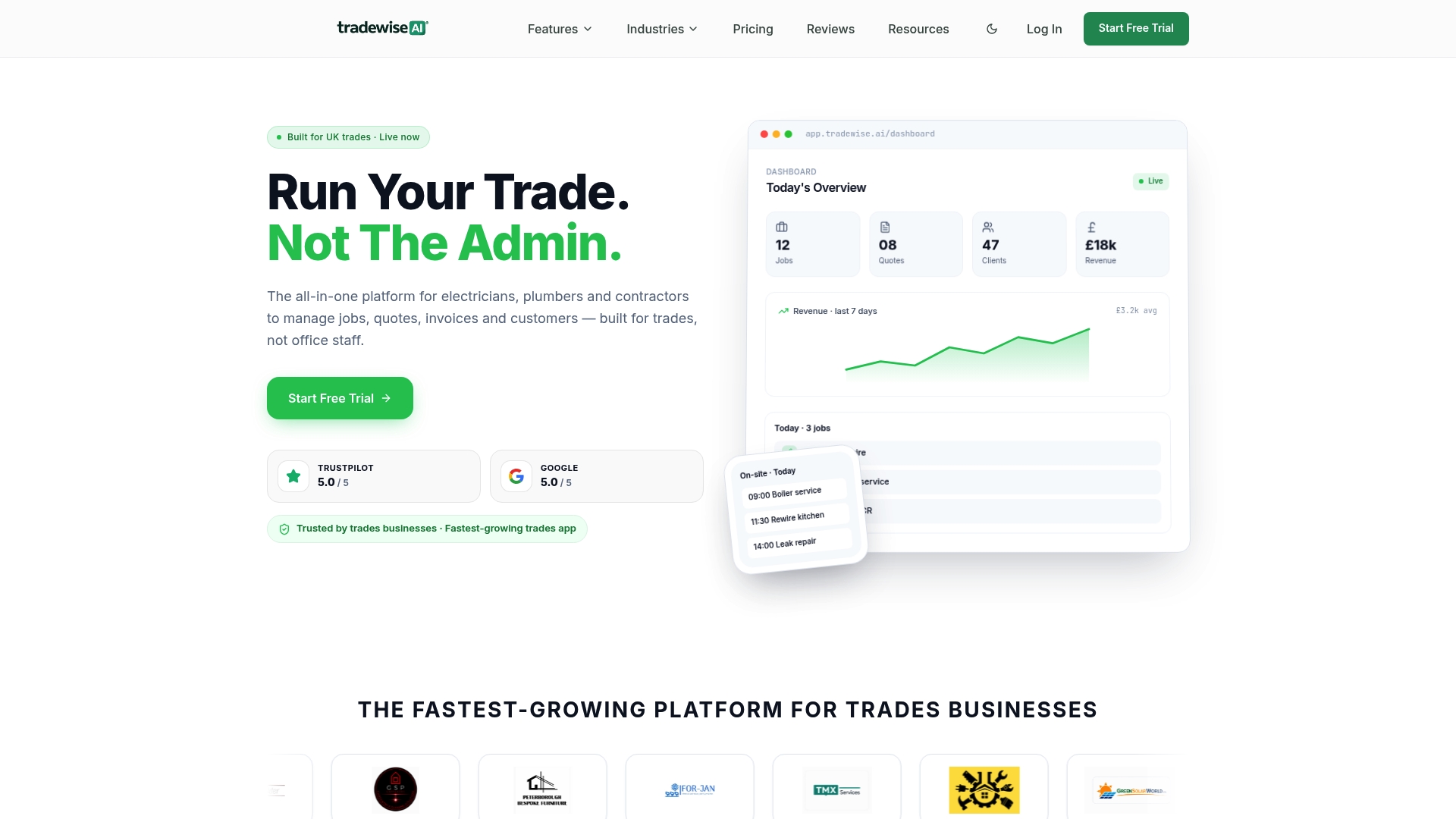
Tradewisehq is built specifically for UK builders and tradespeople. It brings bid tracking, contract templates, payment milestone management, and client communication into one mobile-first platform. You can log every tender you submit, store signed contracts, and set payment reminders tied to project milestones. Whether you are managing a single large project or juggling multiple jobs, Tradewisehq removes the admin that costs builders time and money. Start managing your contracts the way winning builders do.
FAQ
What is the central digital platform for UK builders?
The Central Digital Platform (Find a Tender) is the official free portal for UK public sector building contracts. Builders register using GOV.UK One Login and their Companies House number to access, manage, and submit tenders.
How much deposit should a UK builder ask for?
UK builder deposits typically range from 10%–25% of the contract value. Deposits above 25% reduce client confidence and lower your chances of winning private work.
What is the difference between JCT and FMB contracts?
JCT contracts suit complex or larger projects, while the FMB Minor Works Contract is designed for simpler homeowner jobs in the £10,000–£50,000 range. Both cost around £30–£50 and provide commercial protection for both parties.
Why do builders lose tenders despite competitive pricing?
The leading cause of tender losses is lack of pre-tender visibility, not price. Procurement managers shortlist contractors they already recognise and trust before formal evaluation begins.
What is a retention payment in UK construction?
Retention in UK building contracts is typically 3%–5% of the contract value. Half is released at practical completion and the remainder after a 6–12 month defects liability period.