

Yes, if you run a mission-critical site: take out a standard or premium PPM contract rather than relying on ad-hoc repairs. The rationale is straightforward: predictable annual cost, priority response when a unit fails, and a written record that protects equipment life. Before signing anything, run every proposal through the checklist further down this page.
TL;DR:
- Contracts that include parts and labor generally provide better value for mission-critical sites with high downtime costs.
- Ensure all proposals specify detailed scope, response times, clear exclusions, and include a full equipment schedule for transparency.
- The best contracts feature measurable deliverables, fixed response times, and clear cancellation and renewal terms, not just low prices.
- Regularly tracking each system's service history and insisting on detailed inspection reports can prevent performance issues.
- Using a centralized platform to manage multiple contracts reduces administrative workload and ensures compliance with scheduled visits.
Table of Contents
- What is an HVAC maintenance contract, and what tiers exist?
- What does a typical PPM visit cover, and what's excluded?
- How is commercial HVAC maintenance priced?
- Are contracts better value than ad-hoc repairs?
- How do you compare and negotiate vendor proposals?
- Which contract clauses should you insist on in writing?
- How do you manage contracts without drowning in admin?
- What actually makes a maintenance agreement work in practice?
- Managing multiple HVAC contracts without the admin overload
- Sources
What is an HVAC maintenance contract, and what tiers exist?
A commercial HVAC maintenance contract, often called a planned preventative maintenance (PPM) agreement, is a scheduled service arrangement covering inspection, cleaning and adjustment of heating and cooling equipment across a site. Most UK providers sell three broad variants:
- Maintenance-only — planned visits and labour for inspection, no parts or repairs included.
- Maintenance plus labour discount — routine visits plus a reduced hourly rate on any repair labour.
- Maintenance plus parts — visits, labour and a capped allowance for consumable parts.
Tier choice should match risk, not budget alone. A basic tier suits low-occupancy storage units; standard suits typical offices and retail; premium suits hospitals, data rooms or anywhere downtime is expensive. For mission-critical assets, quarterly visits are the industry norm for commercial systems, dropping to biannual for less critical plant.
What does a typical PPM visit cover, and what's excluded?
A properly scoped visit follows a defined checklist, not a vague "tune-up." Expect the technician to complete:
- Coil inspection and cleaning (evaporator and condenser)
- Refrigerant level check against manufacturer specification
- Electrical connection tightening and load checks
- Lubrication of moving parts (motors, bearings, fans)
- Condensate drain clearing
- Filter inspection and replacement where needed
- Thermostat calibration and safety cut-out testing
These recurring tasks appear across most manufacturer-published checklists, including Trane's maintenance guidance, and they're the baseline you should hold every quote against.
Exclusions matter just as much. Standard contracts typically exclude major component replacement (compressors, heat exchangers), refrigerant top-ups beyond a small threshold, ductwork repairs and mould remediation. List every unit by make, model and serial number in the schedule attached to the contract, so scope can't quietly shrink after signing.
How is commercial HVAC maintenance priced?
Pricing shape depends on more than headline cost. The main drivers are:
- Number and complexity of systems on site
- Site access and technician travel time
- Whether parts are included, discounted, or excluded entirely
- Payment structure: monthly subscription, annual prepay (often discounted), or per-visit billing
Annual prepay tends to save money if your provider is reliable, but locks you in for the year. Monthly billing gives more flexibility to switch. Watch for red flags: vague "tune-up" language with no itemised tasks, unclear caps on parts allowances, and open-ended emergency call-out fees that aren't stated as a fixed figure or formula.
Are contracts better value than ad-hoc repairs?
The comparison usually comes down to uptime criticality versus flexibility.
- In favour of contracts: predictable annual spend, priority response ahead of non-contract customers, longer equipment life, and often lower energy bills from cleaner, better-tuned systems.
- Against contracts: poor value if the scope is thin or priced above what pay-as-you-go repairs would cost; visits can also uncover repairs you didn't ask for and now feel pressured to approve.
One widely cited consumer analysis warns that repair-inclusive plans are often poor value once exclusions are factored in, so read the parts and labour caps closely rather than trusting the marketing summary. The decision rule is simple: price out included visits at your local market labour rate, compare that total to the contract fee, then weigh the gap against how much an unplanned outage would actually cost your operation.
How do you compare and negotiate vendor proposals?
Score every proposal against the same criteria before you compare price. Ask each vendor for:
- A full equipment schedule (make, model, serial, location)
- Confirmed visit cadence and duration per visit
- A sample written report from a previous client, including photos
- Guaranteed SLA response windows for priority and emergency call-outs
- A pricing appendix showing parts discount percentage, emergency diagnostic fee policy, and any repair cost caps
Contract clauses deserve as much scrutiny as price. Check the term length, whether renewal is automatic or requires active confirmation, whether the agreement transfers if you sell or vacate the building, your cancellation rights, and proof of liability insurance.
Record these metrics for every bidder: guaranteed response time in hours, at least one verifiable reference, whether an on-site audit is offered before signing, and how clearly exclusions are written. Vendors that hesitate on any of these points are telling you something.

Pro Tip: Ask for a free site survey before you commit to anything. Reputable commercial suppliers typically offer this as standard, and it gives you an equipment condition baseline you can hold the contractor to later.
Which contract clauses should you insist on in writing?
Push back on any proposal that leaves these vague:
- Equipment schedule listing make, model, serial number and location for every unit
- Defined scope per visit, with deliverables specified: written inspection report, photographic evidence, and safety test results
- Pricing appendix separate from the narrative description
- SLA with stated response times and a remedy if the provider misses them
- Discount percentage on parts and on any repair labour
- Workmanship warranty period on completed repairs
- Term length, renewal mechanics, transfer clause, and cancellation or refund rules
A detailed service agreement template is a useful starting point for wording most of these clauses, and it's worth having your facilities or legal team mark up rather than accepting a supplier's boilerplate unchanged.
How do you manage contracts without drowning in admin?
Keep a per-system log covering installation date, serial number, warranty status and full service history. Insist on a written inspection report after every visit, not just a signed timesheet. Agree site access and induction requirements upfront with each supplier. Reference material on construction site inductions is worth sharing with contractors who haven't visited before, since a failed access attempt often triggers a call-out fee neither side wanted.

Pro Tip: A simple job and scheduling workflow, where visits are assigned, approved and invoiced against the same record, cuts missed PPM visits dramatically compared with tracking contracts in spreadsheets or inboxes.
What actually makes a maintenance agreement work in practice?
The contracts that hold up under pressure aren't the cheapest ones. They're the ones with measurable deliverables: a stated response time, a report format agreed in advance, and a cancellation clause that doesn't punish you for switching suppliers. Small administrative fixes, like clear reporting and fair notice periods, usually save more money over a contract's life than chasing the lowest quote.
— Mateusz
Managing multiple HVAC contracts without the admin overload
If you're juggling PPM schedules across several buildings, or several suppliers across one site, the paperwork multiplies fast. Alongside whichever HVAC provider you choose, Tradewisehq gives facilities teams a single place to hold the equipment schedule, track when each system is due for its next visit, and store inspection reports and photos against the right asset.
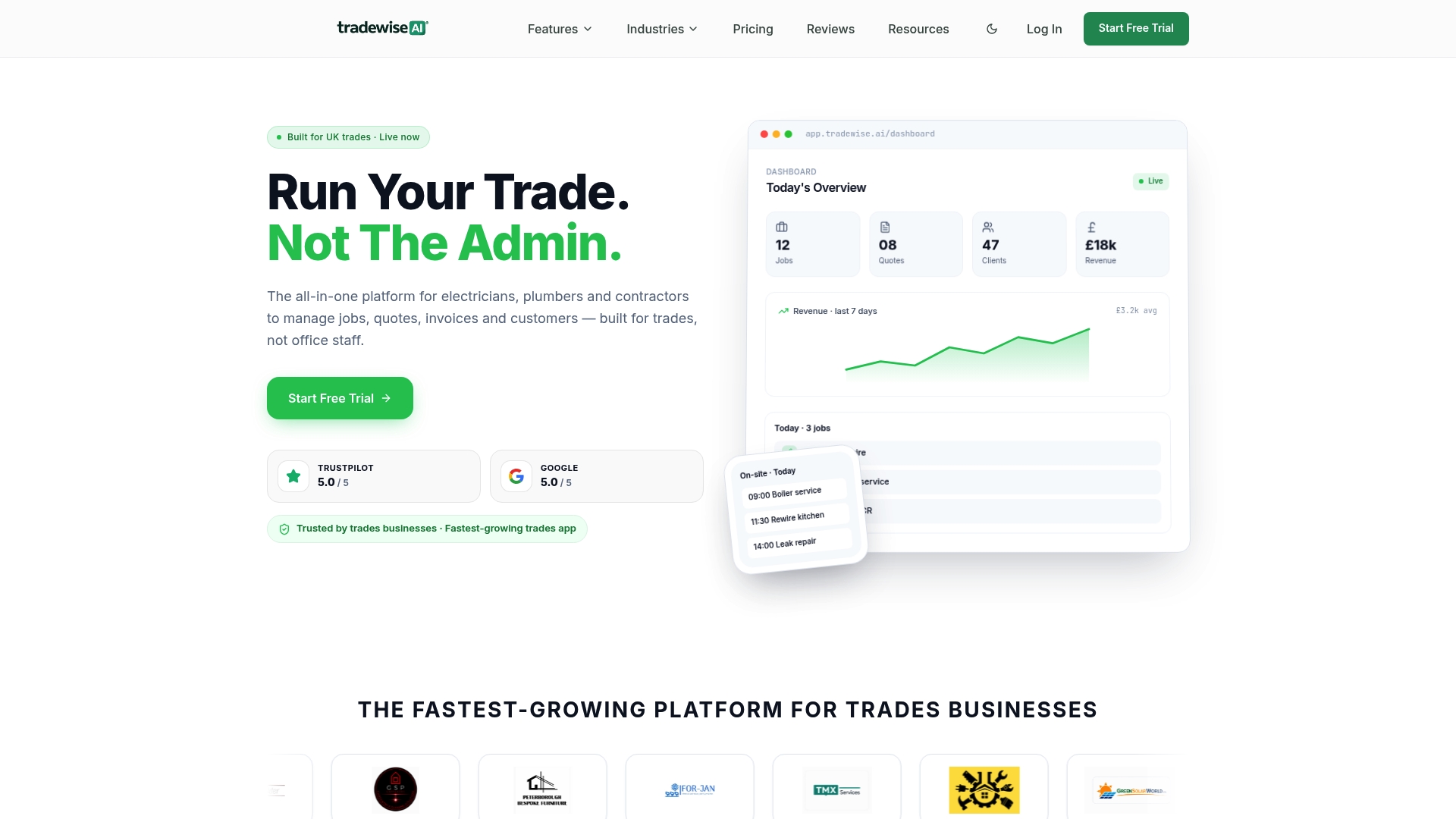
It doesn't replace your maintenance provider. It sits alongside that relationship, turning scattered emails and spreadsheets into one schedule your team can actually rely on, with invoicing linked to completed visits so nothing gets billed twice or missed entirely. If a supplier misses an SLA window, you'll have the record to prove it. Start a free trial on the Tradewise trade management platform and see how much admin disappears once your PPM schedule runs itself.
Sources
For clause wording, the HVAC service agreement template covers tiers and renewal language. For technician competence and compliance checks, see the Environment Agency's regulatory guidance and a trade-focused SWOT framework for assessing suppliers.
- HVAC Service Agreement Template 2026 — Free Maintenance… — FieldServiceCompare
- HVAC Maintenance Contracts Are Usually Bad Buys - National
- What Is an HVAC Maintenance Plan (And Is It Worth It?) - Trane®
- FREE Downloadable HVAC Comprehensive Service Agreement - DTICORP