

Effective subcontractor management is the coordinated process builders use to select, schedule, supervise, and pay specialist trade contractors to keep projects on time, on budget, and compliant. In the UK construction sector, this process covers everything from initial prequalification through to final payment, and it is the single biggest lever general contractors have over project outcomes. Understanding how builders manage subcontractors means understanding structured systems, not ad hoc arrangements. 91% of general contractors report higher productivity when using digital platforms that centralise prequalification, document tracking, and scheduling. That figure tells you the industry has already moved on from spreadsheets and phone calls.
How builders select and prequalify subcontractors
Selection is where most project problems begin or are prevented. Poor prequalification causes defects and safety incidents, which means verifying financial capacity and safety history is not optional. It is the foundation of every reliable builder-subcontractor relationship.
Prequalification goes well beyond checking a CSCS card or a public liability certificate. A thorough process covers:
- Financial stability: Request the last two years of accounts or a credit check. A subcontractor with cash flow problems will slow your project down.
- Safety record: Ask for their RIDDOR history, method statements, and evidence of toolbox talks. A clean record matters more than a glossy brochure.
- References from comparable projects: Speak to other general contractors, not just the subcontractor's preferred contacts.
- Insurance verification: Confirm employer's liability, public liability, and any specialist cover relevant to the trade.
Once you have a shortlist, the next step is bid evaluation. Bid levelling normalises bids by adjusting for missing scope items, so you are comparing like with like rather than chasing the lowest headline number. A bid levelling spreadsheet lists every scope item across all submissions and flags gaps. A subcontractor who omits groundworks from their price is not cheaper. They are a future change order waiting to happen.
Formalising contracts with comprehensive scope and payment terms protects both parties and builds your reputation as a professional contractor. Handshake deals create ambiguity, and ambiguity costs money. Use a written subcontract that specifies scope, programme, payment milestones, and dispute resolution. The JCT Minor Works or JCT Subcontract suite are the standard starting points for UK builders.
Pro Tip: Always include a schedule of rates in your subcontract. When scope changes arise, you have an agreed pricing mechanism and avoid protracted renegotiation.
Does digital onboarding really speed up compliance?
Digital onboarding reduces subcontractor mobilisation time from 11–20 days with manual processes to 5–10 business days with structured digital workflows. That is a meaningful saving on any project with a tight programme. The reduction comes from removing the back-and-forth of chasing documents by post or email and replacing it with a single upload portal.
A structured digital onboarding process works in the following sequence:
- Invite the subcontractor to a digital portal where they upload all required documents: insurance certificates, licences, CHAS or Constructionline accreditation, and operative competency cards.
- Run AI verification against the uploaded documents to confirm they are current, correctly named, and cover the required scope.
- Flag any gaps automatically so the subcontractor can resolve them before mobilisation, not on the morning they arrive on site.
- Issue site induction materials digitally so operatives arrive having already completed health and safety briefings.
- Store all records centrally so your commercial team, site manager, and compliance officer all see the same information.
Automated alerts at 90, 60, and 30 days before expiry prevent the compliance lapses that manual tracking routinely misses. A subcontractor whose public liability insurance lapses mid-project creates a serious legal exposure for the principal contractor. Automated reminders shift the burden from your team's memory to the system.
Platforms like those described in job management software guides for UK builders show how centralised document tracking, scheduling alerts, and compliance monitoring can sit within a single mobile-first tool rather than across three separate spreadsheets and an email inbox.
Pro Tip: Set your automated expiry alerts to trigger at 90 days, not 30. That gives you time to chase, receive, and verify a renewal before the document actually lapses.
How do you coordinate subcontractor schedules effectively?
Unreliable subcontractors are largely a scheduling problem, not a motivation problem. When a subcontractor fails to show up or arrives unprepared, the root cause is almost always unclear scheduling or a missed confirmation. Fixing the system fixes the behaviour.

Pull-planning is the most effective scheduling method for multi-trade projects. Rather than the general contractor issuing a top-down programme, pull-planning asks each trade to work backwards from the completion date and commit to what they need from preceding trades to start their work. This creates a shared, realistic schedule that subcontractors have actually agreed to rather than had imposed on them.
Weekly lookahead schedules, shared in a short coordination meeting every Monday morning, keep everyone aligned. The meeting does not need to last more than 20 minutes. Its purpose is to surface clashes, confirm access, and confirm material deliveries before they become problems on site.
"The three-point confirmation protocol is the single most effective tool for reducing no-shows: confirm at booking, confirm 72 hours before, confirm the morning of. Each confirmation takes 60 seconds and saves hours of wasted standing time."
Structured scheduling confirmations at 72 hours and on the morning of work reduce labour-related delays significantly. This is a process change, not a technology change. You can implement it with a WhatsApp message if needed, though a dedicated platform creates a paper trail.
Centralising communication in one platform that combines RFIs, submittals, daily reports, and schedule updates removes the fragmentation that causes disputes. When a subcontractor claims they were not told about a design change, a unified platform shows exactly when the information was shared and who acknowledged it. That accountability changes behaviour on both sides.
For a detailed breakdown of how to structure your programme across multiple trades, the workforce scheduling guide for construction covers sequencing logic and resource levelling in practical terms.
Payment structures that keep subcontractors accountable
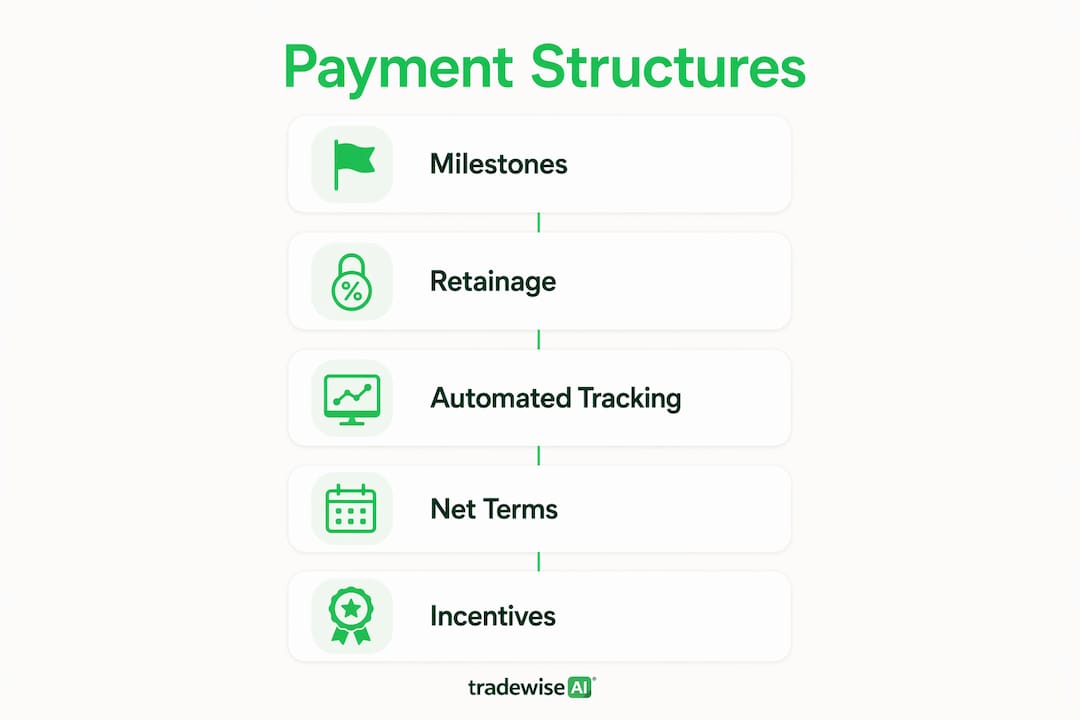
Payment terms are the most direct lever a general contractor has over subcontractor behaviour. The structure you choose signals how professionally you operate and directly affects whether subcontractors prioritise your project.
| Payment Method | How It Works | Best Used When |
|---|---|---|
| Milestone-based | Payment triggers on completion of defined stages | Projects with clear, verifiable phases |
| Net-30 | Invoice paid 30 days after submission | Established relationships with trusted subs |
| Upfront deposit | Percentage paid before work starts | Material-heavy trades such as steelwork or glazing |
| Retainage model | 5–10% withheld until final sign-off | All projects requiring punch-list completion |
Milestone-based payment schedules outperform net-30 arrangements on most projects because they tie cash release to verified progress. Your QS or site manager confirms the milestone is complete, and payment follows within a defined period. This removes the ambiguity of "when is the invoice due" and replaces it with a clear, agreed trigger.
Retainage of 5–10% held until final sign-off incentivises subcontractors to return and complete all punch-list items. Without retainage, a subcontractor who has received full payment has little financial reason to come back for snagging. With retainage, that final payment is the incentive. It is the key lever for securing compliance through project closeout.
Automated invoice tracking removes the payment disputes that damage builder-subcontractor relationships. When both parties can see the same invoice status, approval stage, and expected payment date in real time, the phone calls asking "where's my money?" largely disappear.
Pro Tip: State your retainage percentage and release conditions explicitly in the subcontract, not just in a covering email. Courts have found in favour of subcontractors where retainage terms were not clearly documented in the signed agreement.
Key takeaways
Effective subcontractor management requires structured selection, digital compliance tracking, confirmed scheduling, and milestone-based payment to deliver projects on time and within budget.
| Point | Details |
|---|---|
| Prequalify before you price | Verify financial stability, safety record, and insurance before inviting any subcontractor to tender. |
| Use bid levelling | Adjust all bids for missing scope items to compare true costs, not just headline figures. |
| Digitise onboarding | Structured digital workflows cut mobilisation time from up to 20 days down to 5–10 business days. |
| Confirm schedules three times | Confirm at booking, 72 hours before, and on the morning of work to prevent no-shows and delays. |
| Apply retainage consistently | Hold 5–10% until final sign-off to secure punch-list completion on every project. |
What i have learned running subcontractor programmes
The biggest mistake I see UK builders make is treating subcontractor management as an administrative task rather than a commercial one. They focus on getting documents filed and invoices paid, but they do not build the systems that prevent problems from arising in the first place.
The builders who run the tightest programmes share one habit: they treat every subcontractor relationship as a long-term commercial partnership, not a one-off transaction. That means investing time in proper prequalification, writing clear contracts, and following up on scheduling confirmations even when it feels unnecessary. The subcontractors who work with those builders consistently deliver better results, because the environment rewards reliability.
The technology shift matters, but it is not the whole answer. I have seen builders adopt expensive software and still have chaotic sites because the underlying processes were not defined. The software only works when the process is clear. Start with the process: define your prequalification criteria, write your subcontract template, set your confirmation protocol. Then find a platform that supports those processes rather than expecting the platform to create them for you.
The subcontractor management tips that actually move the needle are not complex. They are consistent. The builders who apply them every time, on every project, are the ones whose subcontractors answer the phone on a Friday afternoon.
— Mateusz
How Tradewisehq supports your subcontractor workflows
Managing subcontractors across multiple live projects is genuinely difficult without a system that keeps everything in one place. Tradewisehq is built for exactly this.
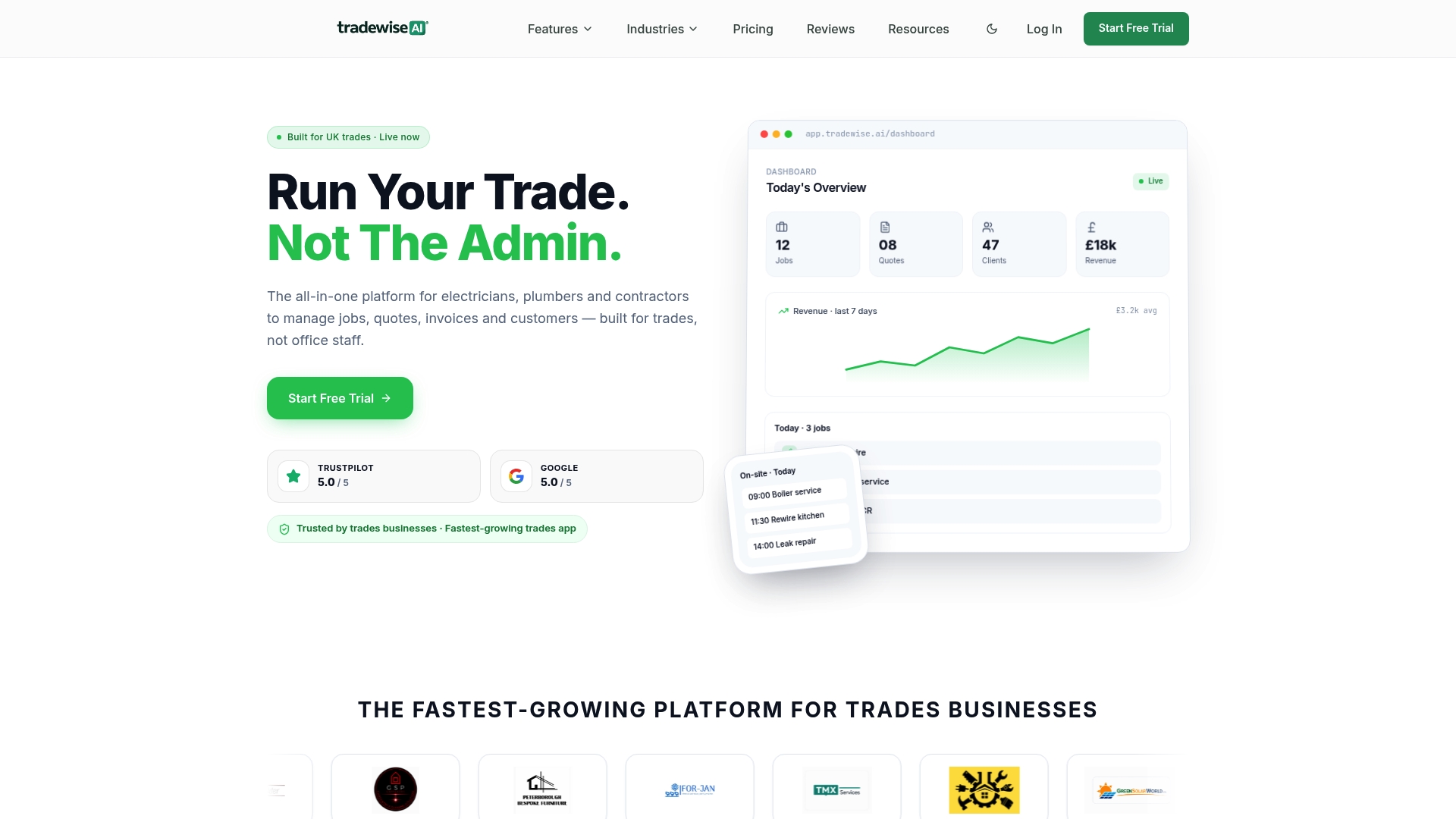
Tradewisehq gives UK builders a mobile-first platform that handles subcontractor document tracking, automated compliance alerts, scheduling coordination, and invoice monitoring in a single tool. You can track bid submissions, receive expiry notifications before documents lapse, confirm schedules with your trades, and monitor payment milestones without switching between apps or chasing emails. The platform is designed for builders who want to run tighter projects without adding administrative overhead. If you are ready to replace fragmented processes with a single coordinated system, Tradewisehq is where to start.
FAQ
What does subcontractor management include?
Subcontractor management covers the full process from prequalification and contract award through to scheduling, compliance monitoring, quality oversight, and final payment. It is a structured commercial process, not just document filing.
How do builders reduce subcontractor no-shows?
Pull-planning and three-point scheduling confirmations at booking, 72 hours before, and on the morning of work significantly reduce no-shows. Most delays stem from unclear scheduling rather than subcontractor unreliability.
What is bid levelling in construction?
Bid levelling adjusts subcontractor bids for missing scope items so that all submissions are compared on an equal basis. It prevents builders from selecting an apparently cheap bid that excludes significant work.
How much retainage should builders hold?
The standard retainage rate is 5–10% of the subcontract value, held until the subcontractor completes all punch-list items and the client signs off the work. This is the primary mechanism for securing project closeout compliance.
Which contracts should UK builders use with subcontractors?
The JCT Minor Works Building Contract and the JCT Standard Building Subcontract are the most widely used forms in the UK. Both provide clear frameworks for scope, payment, and dispute resolution that protect both the builder and the subcontractor.