
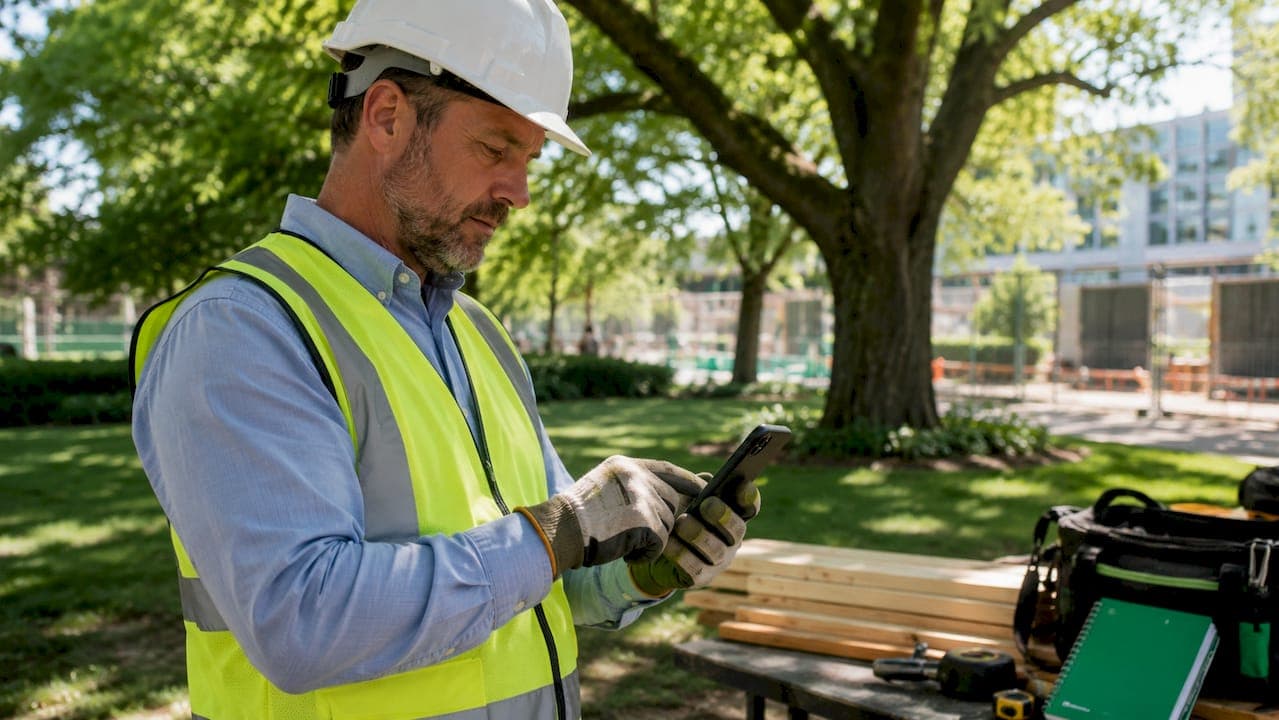
Mobile apps for builders are defined as mobile-first software platforms that give construction teams real-time access to job data, communication tools, and site documentation directly from a smartphone or tablet on site. The role of mobile apps for builders has shifted from optional convenience to operational necessity. Construction management apps reduce project delays by 10–15%, improve field productivity by 15–20%, and decrease safety incidents by 10–25%. That is a measurable competitive advantage, not a marginal gain. Platforms like BuildBite and Tradewisehq demonstrate that mobile-first design, built specifically for field realities, delivers results that desktop-retrofitted software simply cannot match.
How do mobile apps improve project management on site?
Mobile applications for construction replace the paper trail that has slowed UK builders for decades. Real-time job tracking with GPS, instant photo capture, and automated task assignment give site managers a live picture of progress without waiting for end-of-day reports. Automated mobile data capture reduces error rates from 5–10% down to under 0.5%. That shift alone removes a significant source of rework, disputes, and billing delays.
Communication is the other major gain. When a subcontractor on a Midlands housing project spots a structural discrepancy, a mobile app lets them photograph it, tag the relevant task, and notify the site manager in seconds. Without an app, that same issue might sit in a WhatsApp thread or a paper snag list for days. Mobile apps centralise project information and automate time tracking, which directly improves profitability by reducing the gap between work completed and work invoiced.

Billing cycles are a concrete example of this impact. Manual, paper-based reporting stretches invoice turnaround to 10–15 days. Automated mobile reporting cuts that to 5–7 days. For a builder running multiple projects simultaneously, that difference in cash flow is significant.
Key improvements mobile apps deliver to project management:
- GPS-verified job check-ins that confirm crew attendance and location without manual sign-in sheets
- Instant photo and video documentation linked directly to tasks, reducing disputes with clients and subcontractors
- Automated progress reports that replace daily paper logs and reduce timesheet errors for field crews
- Role-based permissions so office staff and site crews each see only the data relevant to their work
- Push notifications that flag overdue tasks or safety issues before they escalate
Pro Tip: Prioritise apps with high-contrast displays and large touch targets. Builders wearing gloves or working in direct sunlight need interfaces designed for those conditions, not scaled-down desktop screens.
What design features make builder apps actually usable?
The difference between an app that gets used and one that gets abandoned comes down to design decisions made before a single line of code is written. Field apps require large touch targets, high-contrast interfaces, and voice input to remain usable under harsh site conditions. A builder on a roof in February does not have the patience for a cluttered menu system.
Offline-first architecture is the single most critical technical requirement for any construction app. UK sites, particularly in rural areas or below-ground works, regularly have poor or no mobile connectivity. An app that fails without a signal is worse than useless on site. It creates false confidence and data gaps. Offline-first apps handle large files including PDFs, photos, and videos with conflict-free syncing to prevent data loss when connectivity returns.
Asymmetric sync is a design principle worth understanding. Asymmetric sync gives office staff data-rich interfaces while field crews get lightweight versions suited to older or lower-cost Android and iOS devices. This matters because not every operative on a UK site carries a flagship smartphone. An app that runs poorly on a three-year-old Android handset will not get used.
| Feature | Mobile-First Design | Desktop-First Design |
|---|---|---|
| Offline capability | Built-in, conflict-free sync | Limited or absent |
| Interface | Large targets, voice input, sun-readable | Mouse-optimised, small elements |
| Device compatibility | Runs on older Android and iOS | Requires modern hardware |
| Adoption on site | High, due to field-specific UX | Low, crew resistance common |
| Data accuracy | Real-time capture at source | Manual re-entry, higher error rate |
Pro Tip: When evaluating a construction app vendor, ask specifically whether their product was built mobile-first or adapted from a desktop platform. The answer will tell you everything about how it will perform on site.
What measurable benefits can builders expect?
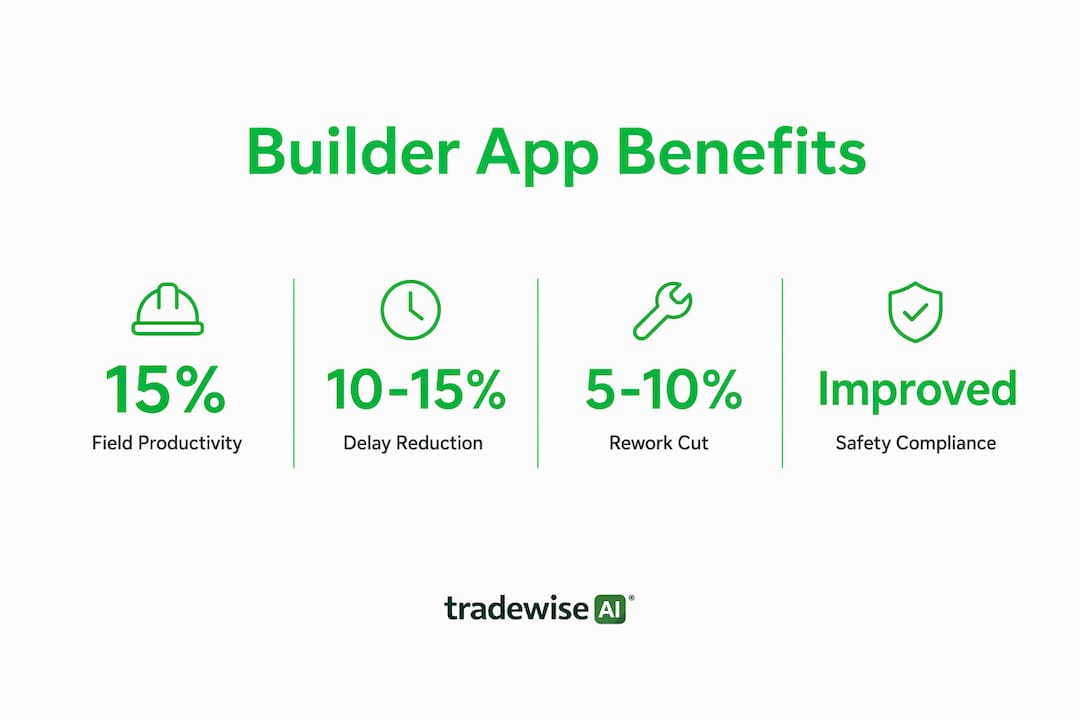
The business case for mobile tech in construction is well established. Construction apps reduce project delays by 10–15%, increase productivity by 15–20%, and cut safety incidents by 10–25%. These are not theoretical projections. They reflect documented outcomes from builders who have replaced paper-based processes with purpose-built mobile software.
Rework is one of the most expensive problems in UK construction. Mobile apps reduce rework by 5–10% by catching errors at the point of capture rather than during a post-project review. A site operative who photographs completed work and logs it against a specific task creates an instant audit trail. That trail protects the builder in disputes and speeds up client sign-off.
Safety compliance is another area where digital tools for builders deliver measurable value. Mobile apps support offline incident reporting, hazard assessments, and near-miss filing even in areas with poor connectivity. Safety apps require robust offline-first architecture precisely because safety events do not wait for a good signal.
The financial return is achievable within a realistic timeframe. ROI is typically achieved within 1–3 years for tailored solutions. Generic off-the-shelf apps often take longer because they require workarounds that slow adoption and reduce the efficiency gains.
Top operational gains builders report after adopting mobile software for site management:
- Faster invoicing and improved cash flow from shorter billing cycles
- Fewer disputes with clients due to photographic and timestamped evidence
- Improved attendance tracking for site managers and reduced time theft
- Better compliance records for Health and Safety Executive audits
- Reduced administrative burden on site managers, freeing time for actual site supervision
Custom apps vs off-the-shelf: which suits UK builders better?
Off-the-shelf construction management apps offer speed and lower upfront cost. The trade-off is fit. A generic platform built for the North American market will not map cleanly onto a UK groundworks contractor's workflow, procurement process, or CIS tax obligations. Custom-built apps outperform off-the-shelf solutions by closely matching company workflows, which increases crew adoption and operational efficiency.
The adoption problem is real and underappreciated. Bloated software with features a crew will never use creates friction. That friction leads to workarounds, which leads to the same paper-based chaos the app was meant to replace. Custom apps aligned with unique workflows improve worker engagement because the tool reflects how the team actually works, not how a software vendor imagines they work.
Integration is the other major advantage of tailored solutions. A custom app can connect directly with existing ERP systems, BIM platforms, or accounting software like Xero or Sage. That removes the double-entry problem that plagues builders who use disconnected tools. Live cost tracking, automated purchase orders, and real-time budget visibility become possible when the app is built to fit the business.
Future developments worth watching include AI-assisted scheduling, wearables integration for safety monitoring, and smarter reporting that flags anomalies before they become problems. Builders who invest in mobile-first job management now will be better positioned to adopt these capabilities as they mature.
Key considerations when choosing between custom and off-the-shelf builder apps:
- Does the platform support UK-specific requirements including CIS, VAT, and RAMS documentation?
- Can it integrate with your existing accounting or ERP system without manual data transfer?
- Does the vendor have a track record in offline-first, mobile-first builds for construction?
- Offline-first development adds 3–4 weeks to build timelines. Vendors who do not acknowledge this are underestimating the complexity.
Key takeaways
Mobile apps deliver their greatest value for builders when they are designed mobile-first, work offline, and map directly to how field crews actually operate.
| Point | Details |
|---|---|
| Productivity and delay reduction | Construction apps cut project delays by 10–15% and boost field productivity by 15–20%. |
| Error rates drop sharply | Automated data capture reduces site reporting errors from 5–10% down to under 0.5%. |
| Offline-first is non-negotiable | Apps must function without connectivity to remain reliable on UK construction sites. |
| Custom fit drives adoption | Apps mapped to real workflows see higher crew usage and fewer workarounds than generic tools. |
| ROI is achievable | Tailored mobile solutions typically return their investment within 1–3 years. |
Why mobile-first is the only sensible choice for UK builders in 2026
I have spent years watching UK builders adopt software that was never designed for them. The pattern is consistent. A desktop platform gets purchased, a training session gets booked, and within three months the site crew has reverted to WhatsApp and paper. The software sits unused because it was built for a project manager at a desk, not an operative in a hard hat.
The builders I have seen genuinely transform their operations share one thing in common. They chose tools built from the ground up for field use. Not adapted, not ported, but built with the assumption that the primary user is standing on a muddy site with gloves on and a phone in one hand. That distinction matters more than any feature list.
The offline-first requirement is where most vendors fall short. I have seen apps crash or lose data the moment a crew goes underground or into a rural area with no signal. That single failure destroys trust in the tool and sends everyone back to paper. Getting offline architecture right is genuinely difficult, and it adds time and cost to development. Any vendor who does not acknowledge that upfront is not being straight with you.
My honest view is that builders who invest in the right mobile software now will have a structural advantage over those who wait. The productivity gap between digitally equipped crews and paper-based ones will only widen. The question is not whether to adopt mobile apps. The question is whether you choose tools that actually work on site or ones that look good in a sales demo.
For a practical starting point, the benefits of job management software for UK builders covers the operational gains in detail.
— Mateusz
See how Tradewisehq puts this into practice
Tradewisehq is an AI-powered operating system built specifically for tradespeople and builders in the UK. It brings together job management, scheduling, quoting, invoicing, and client communication into a single mobile-first platform designed for field use.
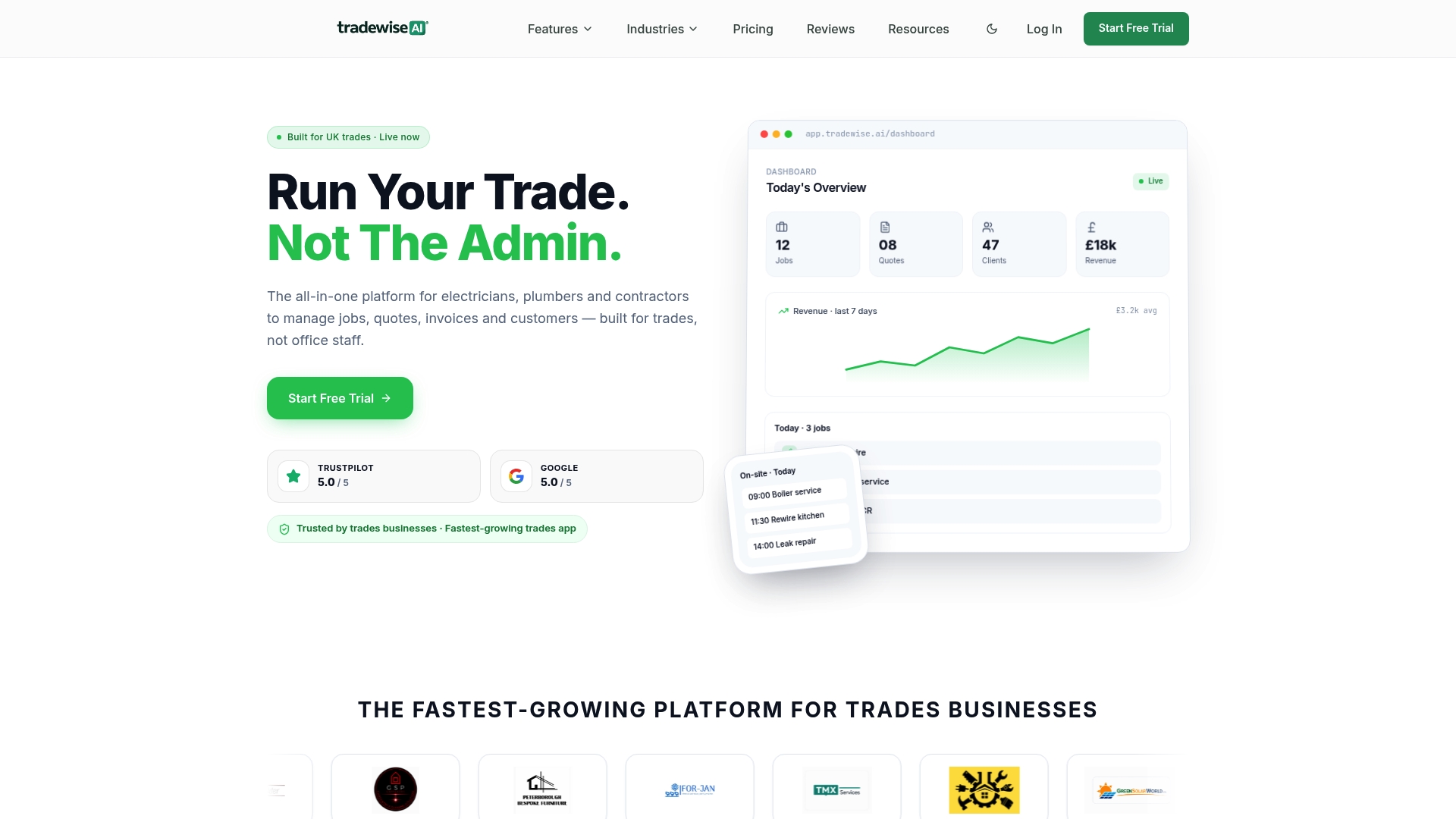
Every feature in Tradewisehq is built around how builders actually work, not how office software assumes they do. Real-time field data capture, live workforce syncing, and automated workflows mean less time on admin and more time on site. If you are ready to replace disconnected tools with one platform that works offline and scales with your business, explore Tradewisehq and see what it can do for your operation.
FAQ
What is the role of mobile apps for builders?
Mobile apps for builders provide real-time job tracking, site documentation, communication, and scheduling tools accessible directly from a smartphone or tablet on site. They replace paper-based processes and reduce errors, delays, and administrative overhead.
How do mobile apps improve building projects?
Construction management apps reduce project delays by 10–15% and improve field productivity by 15–20% by giving teams live access to job data, automated reporting, and instant communication.
Do construction apps work without an internet connection?
The best mobile applications for construction use offline-first architecture, which stores data locally and syncs automatically when connectivity returns. This is critical for UK sites with poor signal coverage.
How long does it take to see a return on a builder app?
Tailored mobile construction apps typically deliver ROI within 1–3 years, with faster returns driven by reduced rework, shorter billing cycles, and fewer administrative errors.
What should UK builders look for in a site management app?
Prioritise offline-first functionality, large touch targets for gloved use, role-based permissions, and integration with UK-specific requirements such as CIS and VAT. Check whether the app was built mobile-first or adapted from a desktop platform, as this affects real-world usability on site.