
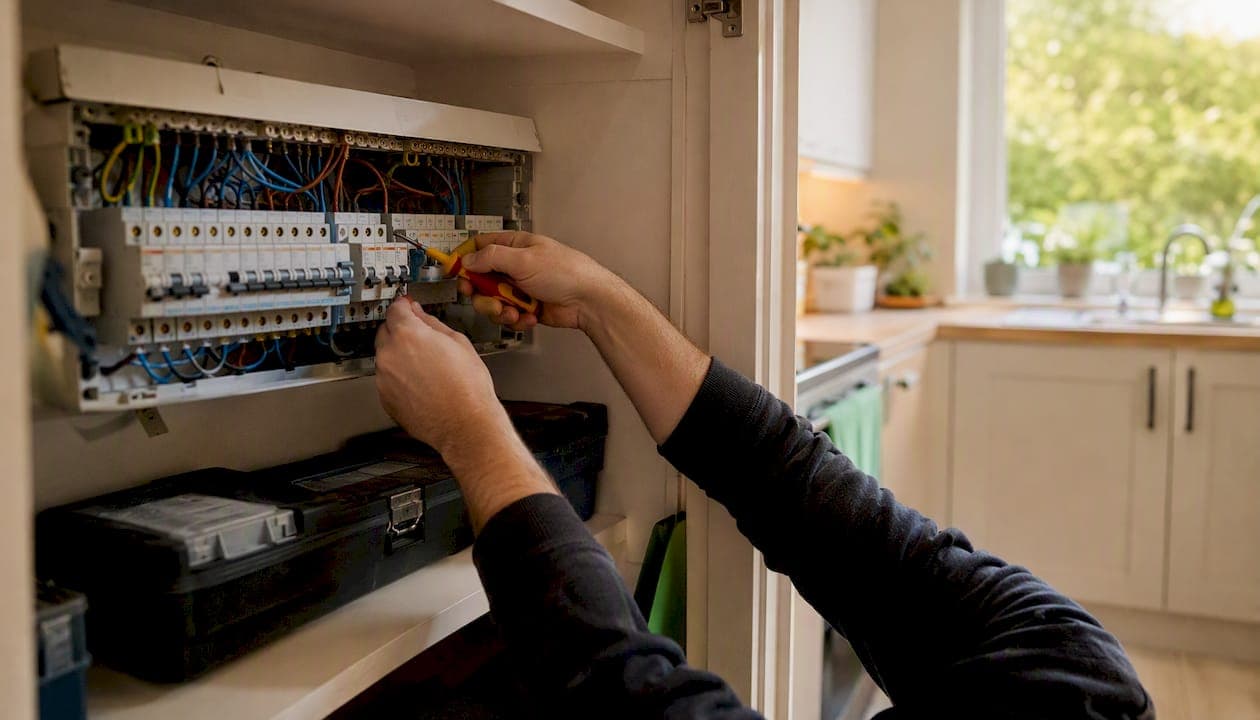
A registered electrician in the UK is someone enrolled in an authorised Competent Person Scheme, which allows them to self-certify notifiable domestic electrical work under Part P of the Building Regulations and carry out that work to the safety standard set by BS 7671. Your first move is simple: ask for their registration number and check it against the scheme's public register, such as the NICEIC find-a-tradesperson tool.
The term "registered" gets used loosely in the trades. It does not automatically mean licensed, insured, or competent. What it should mean, in a domestic context, is that the electrician belongs to a scheme that has assessed their technical ability and can notify building control on their behalf when the work is notifiable.
Pro Tip: Before you book anyone, ask for their registration number and scheme name in writing. A genuine registered electrician will give you both without hesitation.
Key takeaways
A registered electrician in the UK means scheme membership under Part P, not a government licence, and the legal responsibility for certified notifiable work rests with the property owner.
| Point | Details |
|---|---|
| Verify before you book | Check the registration number on the NICEIC, NAPIT, or ELECSA public register before any work starts. |
| Insist on certificates | You should receive an EIC and a Building Regulations Compliance Certificate after notifiable work. |
| Know what is notifiable | New circuits, consumer unit replacements, and work in kitchens or bathrooms are commonly notifiable under Part P. |
| Keep paperwork safe | Store certificates for conveyancing, insurance claims, and future EICR comparisons. |
| Contact Building Control if in doubt | If an electrician cannot certify the work, your local Building Control authority can advise on the regularisation route. |
Table of Contents
- What does "registered electrician" actually mean in the UK?
- How to check an electrician is genuinely registered
- What paperwork should you receive after electrical work?
- Qualifications and proof of competence to ask for
- Which jobs are notifiable under Part P?
- Why hiring an unregistered electrician is risky
- Practical checklist: questions to ask before and during the job
- Useful registers and official guidance
- Sources
What does "registered electrician" actually mean in the UK?
There is no single government licence for electricians in the UK. Registration is not a national credential issued by a central authority. Instead, it typically means one of three things:
- Competent Person Scheme membership: The electrician has been assessed by an approved scheme (NICEIC, NAPIT, ELECSA, or similar) and can self-certify notifiable work under Part P in England and Wales.
- Business or tax registration: The company is registered with HMRC or Companies House. This is a legal trading requirement, not a technical competence mark.
- Local authority notification: For one-off notifiable jobs, a non-scheme electrician can notify the local Building Control authority directly, though this involves inspection fees and delays.
For domestic work, Competent Person Scheme membership is what matters most. Schemes carry out regular technical assessments, check public liability insurance, and provide a complaints procedure. That combination is a consumer protection layer, not just a badge.
Regional differences matter too. Part P applies in England and Wales. Scotland operates under Building Standards, and Northern Ireland follows Technical Booklet E. The underlying wiring safety standard, BS 7671 (the IET Wiring Regulations), applies across all four nations regardless of which notification route is used.
How to check an electrician is genuinely registered
Verification takes under ten minutes if you follow these steps in order.
- Ask for the registration number and scheme name. Any registered electrician should provide this immediately. Write it down.
- Search the scheme's public register. Use the NICEIC find-a-tradesperson search, the NAPIT register, or the ELECSA directory. Cross-reference the business name and postcode, not just the number.
- Check the Electrical Competent Person Register. This is a single search point covering multiple schemes and is worth using as a secondary check.
- Ask to see a sample compliance certificate. A registered contractor can show you a blank Electrical Installation Certificate (EIC) template with their scheme details printed on it.
- Confirm insurance and complaints procedure. Ask whether their public liability insurance is current and what happens if a dispute arises after the work.
Checking whether an EICR has been filed for a property is also possible via the TESC EICR Register, which is useful for landlords buying or selling.
Pro Tip: Logos on a van or website can be copied. Always verify the registration number against the scheme's own database, and confirm the business name matches exactly. A number that returns no result, or a different company name, is a serious red flag.
What paperwork should you receive after electrical work?
The documents you receive depend on the type of work carried out. Here is what to expect:
- Electrical Installation Certificate (EIC): Issued after new installation work, such as a new circuit or consumer unit replacement. This is the primary compliance document.
- Minor Electrical Installation Works Certificate: Used for smaller additions to an existing circuit, such as adding a socket to an existing ring.
- Building Regulations Compliance Certificate: Issued by the scheme after it notifies building control. The scheme typically notifies building control within 30 days of the work being completed, after which you receive this certificate.
- Electrical Installation Condition Report (EICR): Not issued after new work, but required periodically for rental properties. Landlords in England must have a valid EICR carried out every five years under the Electrical Safety Standards in the Private Rented Sector (England) Regulations 2020.
If paperwork is missing after notifiable work, contact the electrician first. If they cannot produce it, you may need to apply for retrospective regularisation through your local Building Control authority. This usually involves a fee and a physical inspection of the installation, which can be disruptive and costly, particularly if remedial work is then required.
The TESC EICR Register lets landlords and buyers check whether an EICR has been filed for a property independently of the contractor.
Qualifications and proof of competence to ask for
Qualifications are not the same as scheme registration, but they underpin it. Here is what the main credentials actually mean:
- NVQ Level 3 in Electrotechnical Services: The core vocational qualification for a fully qualified electrician. It covers installation, inspection, and testing and is typically completed via an apprenticeship or adult learner route.
- AM2 Assessment: A practical end-point assessment that tests real-world wiring and fault-finding skills. Passing the AM2 is a standard requirement for achieving Approved Electrician or Electrician grade with the JIB (Joint Industry Board).
- City & Guilds 2393-10: A building regulations knowledge qualification covering Part P. It helps electricians understand notification requirements but does not itself confer scheme registration. Some homeowners see this on a CV and assume it means the electrician is registered. It does not.
- ECS Gold Card (Approved Electrician): The Electrotechnical Certification Scheme card that confirms NVQ Level 3 and AM2 completion. It is the standard site proof-of-competence card for the UK electrical industry.
The NAPIT qualification guide-NAPIT-Registration-Guide-to-Qualifications-Requirements-Electrical-v7.1-(06.25).pdf) sets out in detail which qualifications are required for scheme registration, including separate lists for wiring regulations, initial verification, and periodic inspection. Scheme registration is based on assessed competence across all three areas, not a single short course.
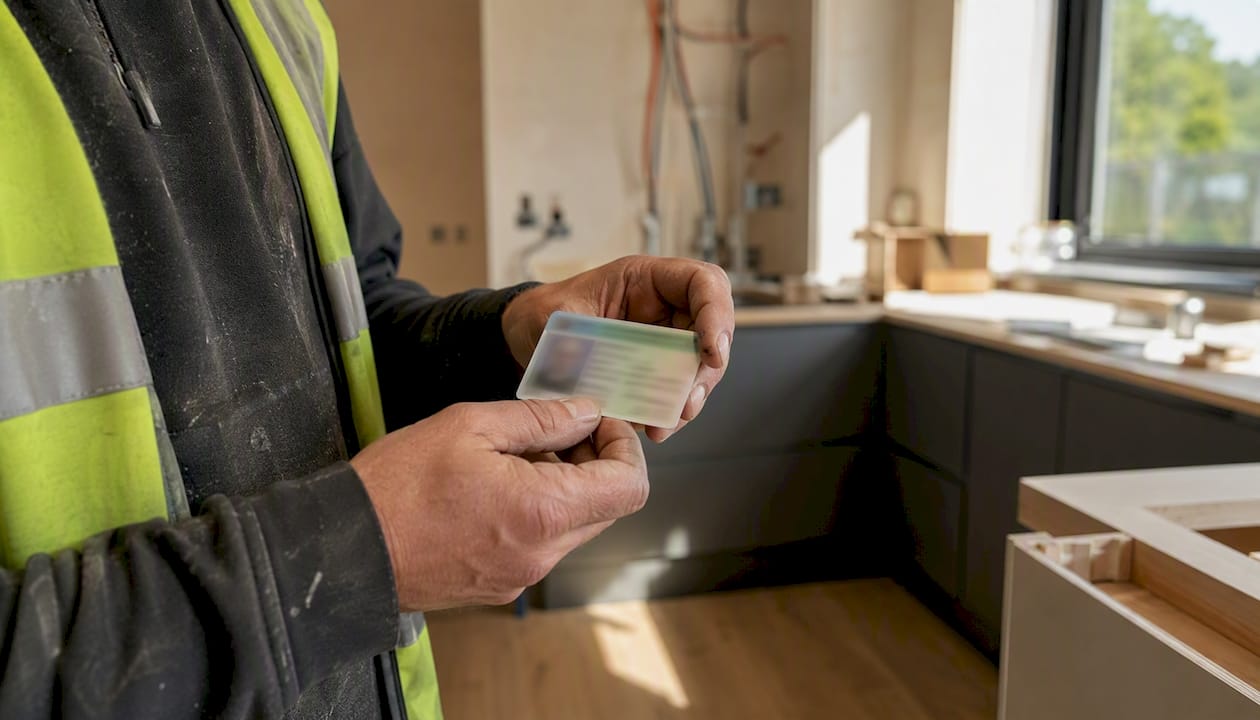
You can verify an ECS card on the ECS website using the card number. Ask to see the physical card on site, and check the expiry date and grade.
Which jobs are notifiable under Part P?
Not every electrical job triggers a notification requirement. Most domestic electrical work in dwellings is treated as notifiable, but the scope is worth understanding before you hire.
Jobs that are commonly notifiable include:
- Installing a new circuit from the consumer unit
- Replacing a consumer unit (fuseboard)
- Any electrical work in a bathroom or shower room (special location)
- Any electrical work in a kitchen that involves a new circuit
- Full or partial rewires
- Installing outdoor wiring or garden circuits
- Adding a circuit for an electric vehicle charging point
Like-for-like replacements, such as swapping a damaged socket for an identical one on an existing circuit in a non-special location, are generally not notifiable. However, the line is not always obvious. Adding a socket to an existing ring in a kitchen, for example, sits in a grey area depending on how the work is done.
Part P makes the legal responsibility for notifiable work rest with the property owner, not the electrician. If the work is not certified and you later sell the property, a solicitor will flag it during conveyancing. Always ask the electrician directly whether the job is notifiable and how they intend to certify it before work begins.
Why hiring an unregistered electrician is risky
The risks are practical, financial, and legal, and they compound over time.
- Safety: Uncertified work may not meet BS 7671 standards. Faults in wiring are a leading cause of domestic fires.
- Insurance: Your home insurer may refuse a claim if damage is traced to uncertified electrical work. This applies to buildings and contents policies.
- Conveyancing: Missing compliance certificates cause delays during a house sale. Solicitors routinely request EICs and Building Regulations compliance certificates, and an absent certificate can stall or collapse a transaction.
- Remedial costs: Retrospective regularisation through Building Control involves inspection fees and, if the work fails inspection, full remediation at your expense.
- Consumer protection: Scheme-registered contractors are subject to regular technical audits and a formal complaints procedure. Using an unregistered person removes that protection entirely, leaving only the civil courts as a route for redress.
The consumer protection difference between a scheme-registered contractor and an unregistered one is significant. Schemes carry out routine assessments, verify insurance, and handle disputes. Without scheme membership, none of those safeguards exist.
For a guide on how missing certification can create snagging and conveyancing problems, the building work snagging process guide covers the wider picture.
Practical checklist: questions to ask before and during the job
Use this before you confirm a booking.
Before hiring:
- What is your registration number and which scheme are you with?
- Will you provide an Electrical Installation Certificate after the work?
- Is this work notifiable under Part P, and will you notify building control?
- Can you provide evidence of current public liability insurance?
- What is the complaints procedure if I am unhappy with the work?
On the day or during the quote:
- Ask to see the ECS card or equivalent proof of competence.
- Check that test instruments have current calibration stickers.
- Request a written quote that specifies what certificates will be provided.
Red flags to watch for:
- Evasive or vague answers about registration or scheme membership.
- No registration number, or a number that does not match on the scheme's register.
- Inability or unwillingness to provide an EIC after notifiable work.
- Cash-only payment requests with no written quote.
- Quotes significantly below other estimates without a clear explanation.
For a broader hiring framework, the guide to hiring skilled trades workers in the UK covers selection and vetting in more depth.
Pro Tip: Get the registration number before the job starts, not after. Verifying it takes two minutes and removes the most common source of dispute.
Why verification matters more than most homeowners realise
Most people assume that a van with a logo and a confident quote is enough. It is not. The UK electrical registration system is genuinely fragmented: no central licence, multiple schemes, regional rule variations, and a legal responsibility that sits with the property owner rather than the contractor. That combination means the burden of verification falls on you.
Tradewisehq is built partly to address the contractor side of this problem. Electricians using the platform can manage compliance paperwork, store certificates, and track notification deadlines in one place, which means the documentation you should be receiving is less likely to fall through the cracks. For homeowners and landlords, that translates to contractors who are better organised and more likely to deliver the paperwork you need.

If you are an electrician or trade business owner looking to manage jobs, certificates, and client communication without the admin pile-up, Tradewisehq is worth a look.
Useful registers and official guidance
These are the primary resources for verifying registration and certificates.
- NICEIC find-a-tradesperson: Search by postcode or business name to confirm whether a contractor is currently registered with NICEIC. The result shows registration status and any current scheme approvals.
- Electrical Competent Person Register: A multi-scheme search tool covering several approved schemes. Useful as a secondary check when you are unsure which scheme an electrician belongs to.
- TESC EICR Register: Lets landlords, buyers, and homeowners check whether an EICR has been filed for a property. Particularly useful during a property purchase or tenancy renewal.
- Electrical Safety First Part P guidance: Plain-English explanation of what Part P requires, which work is notifiable, and how to find a registered contractor.
Always verify the registration number and business name together. A logo alone confirms nothing.
This article is general information, not a substitute for advice from a qualified lawyer. Consult a qualified legal professional about your own circumstances before acting on anything here.
Sources
- How to Register as an Electrician or Electrical Business in the UK (2026 Guide) | Elec Training
- Part P guidance | Electrical Safety First
- Find a Registered Electrician or Contractor | NICEIC
- Find a verified UK tradesperson | SortedUK