
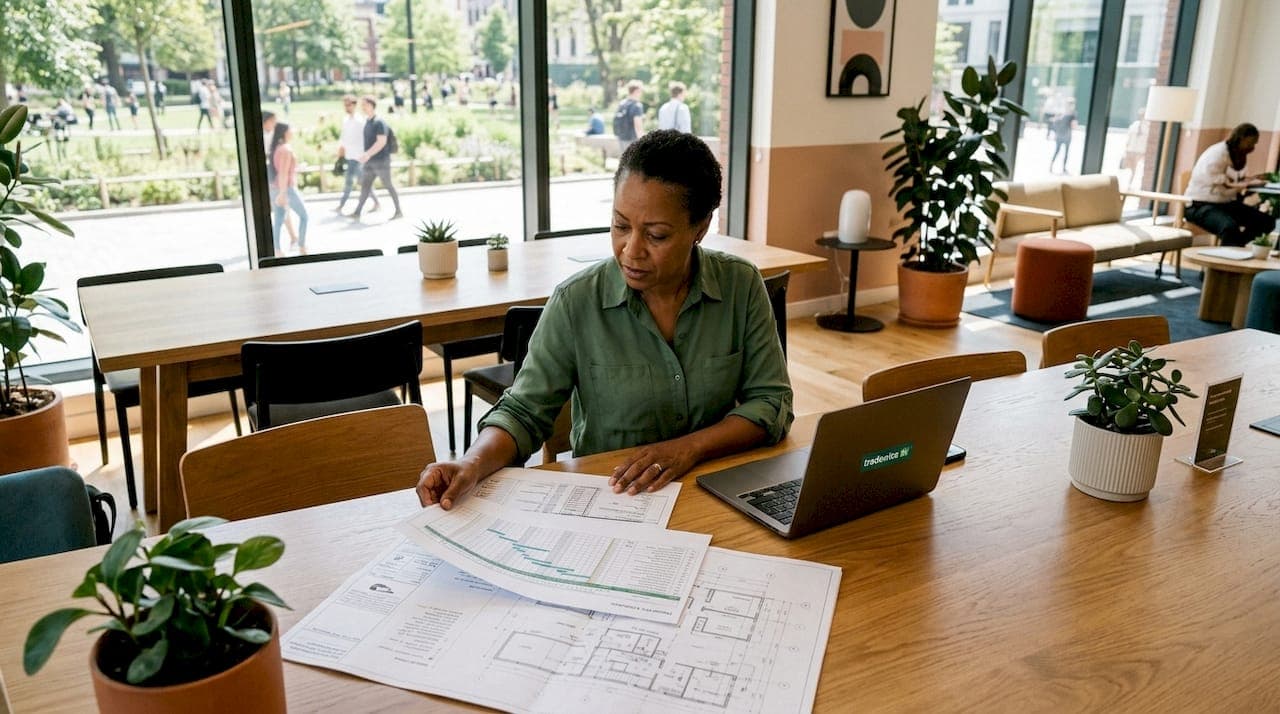
A construction project coordinator is the professional responsible for synchronising schedules, budgets, and stakeholder communication to keep a building project on track. The role is formally known as a construction project coordinator or construction coordinator, and it sits at the operational heart of every successful build. Without this function, subcontractors miss briefings, compliance paperwork falls behind, and costs drift unchecked. Understanding the role of project coordinator in construction is the first step to running tighter, more profitable projects.
The coordinator is not simply an administrator. Core duties include managing project schedules, subcontractor logistics, and monitoring budget versus actual spend. That scope places the coordinator between the project manager's strategic decisions and the field team's daily reality, translating plans into action and flagging problems before they become crises.

What are the primary responsibilities of a construction project coordinator?
The construction coordinator duties cover a wider range than most people expect. The coordinator's role extends beyond basic scheduling into synchronising logistics, compliance, and material delivery, forming the logistical backbone of a project. Every task below feeds directly into that function.
- Schedule management. The coordinator builds and maintains detailed project timelines, updating them as conditions change on site. A slipped delivery or a delayed inspection must be absorbed into the schedule before it cascades into a programme overrun.
- Subcontractor coordination. Organising subcontractor start dates, access windows, and material deliveries is a daily task. Managing subcontractor timelines well prevents the bottlenecks that stall whole phases of work.
- Budget monitoring. Tracking expenditure against planned costs is a core accountability. Explicitly defining budget monitoring as a responsibility is the key factor that differentiates a strategic coordinator from an administrative assistant.
- Communication hub. The coordinator channels information between project managers, field teams, subcontractors, and suppliers. Gaps in that flow cause duplicated work and missed instructions.
- Document control. Contracts, safety records, permits, and compliance paperwork must be filed, version-controlled, and accessible. Regulatory compliance and safety documentation are essential operational tasks, not optional extras.
- Risk identification. Spotting a potential delay or a supply shortage early gives the team time to respond. Proactive ownership of risk is what separates high-performing coordinators from reactive ones.
Pro Tip: Write every scheduling and budget responsibility into the coordinator's brief using action verbs. "Monitors expenditure weekly" is clearer than "assists with finance." Vague language creates gaps that cost money.
What skills and qualifications does a construction coordinator need?
Effective project coordination in construction demands a specific combination of technical knowledge, people skills, and professional experience. Employers set a clear baseline: a minimum of 2 years' experience in a coordination or related construction role, alongside a Bachelor's degree or equivalent field experience. That combination signals both theoretical grounding and practical readiness.
Technical proficiency
Software proficiency in tools such as Primavera P6 and Microsoft Project is essential for effective scheduling and progress tracking. These platforms allow coordinators to model timelines, assign resources, and identify delays before they affect the critical path. Coordinators who also understand cost accounting and milestone-based expenditure tracking stand out from the field.
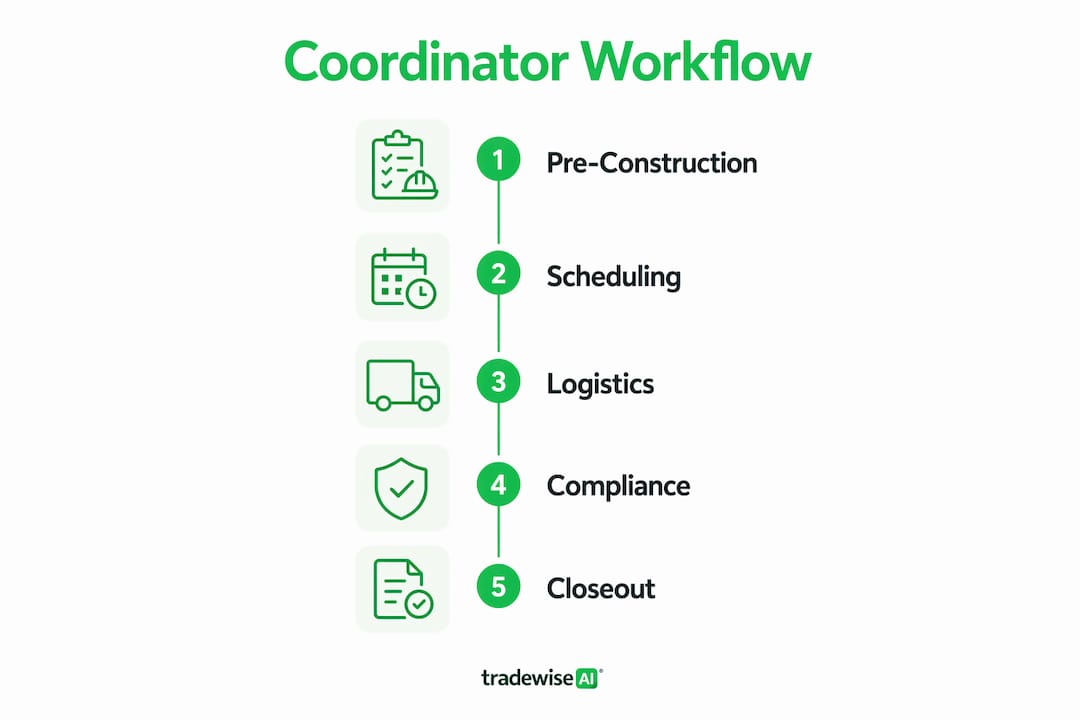
Knowledge of regulatory and safety requirements is equally non-negotiable. A coordinator who cannot read a compliance checklist or interpret a CDM regulation creates legal exposure for the whole project.
Interpersonal and organisational skills
Strong communication sits at the top of every hiring brief for this role. The coordinator speaks to site workers, subcontractors, clients, and senior management, often on the same day, and must adjust register and detail level for each audience. Organisational skill is the engine behind that communication: without a clear system for tracking tasks, deadlines, and documents, information falls through the cracks.
Problem-solving and adaptability matter just as much. No two days look the same for a coordinator; balancing competing priorities is a core challenge, not an occasional inconvenience. Coordinators who thrive treat context-shifting as a skill to develop, not a problem to avoid.
Pro Tip: Build a personal skills gap audit each quarter. Rate yourself on scheduling software, cost tracking, and compliance knowledge. One targeted course per gap closes the distance faster than general reading.
How does the coordinator fit into the construction project lifecycle?
The coordinator's value is highest when involvement begins before ground breaks. Early integration in the pre-construction phase improves resource flow and reduces bottlenecks during active construction. Setting up contracts, confirming insurance, and mapping site logistics before work starts gives every subsequent phase a cleaner foundation.
During construction, the coordinator sits between the project manager and the site superintendent. Clear reporting structures improve communication flow and accountability within project teams. The coordinator typically reports upward to the project manager and outward to subcontractors, suppliers, and clients, acting as the connective tissue that links field operations with management decisions.
At project closeout, the coordinator handles final documentation, outstanding compliance sign-offs, and the handover pack. That final phase is often underestimated. A poorly managed closeout can delay practical completion and trigger retention disputes.
The table below maps the key roles in a construction project team against their primary coordination touchpoints.
| Role | Primary coordination touchpoint |
|---|---|
| Project manager | Strategic decisions, programme approval, budget sign-off |
| Construction coordinator | Schedule updates, subcontractor liaison, document control |
| Site superintendent | Daily site operations, safety oversight, progress reporting |
| Subcontractors | Task execution, material requirements, access scheduling |
| Client | Progress updates, change requests, handover documentation |
Understanding where the coordinator sits in this structure helps every team member know who to contact and when. That clarity alone reduces miscommunication and unnecessary delays.
What challenges do construction project coordinators face?
Construction project coordination is demanding precisely because the environment never stays still. Coordinators must manage constant context-shifting among field teams, subcontractors, and management. Each group has different priorities, and the coordinator must hold all of them in view simultaneously.
The most common challenges break down into four areas.
- Competing priorities. Multiple projects or phases running at once create scheduling conflicts. A coordinator managing three subcontractors across two sites must triage daily without losing sight of the overall programme.
- Information loss. Verbal instructions, informal messages, and undocumented decisions create gaps. A coordinator who does not centralise communication in writing exposes the project to disputes and rework.
- Unforeseen disruptions. Material shortages, adverse weather, and late deliveries are routine in construction. Proactive problem solving prevents minor site issues from escalating into costly delays. The coordinator who spots a supply risk two weeks out has time to source alternatives; the one who notices it on the day does not.
- Vague accountability. When budget and schedule responsibilities are loosely defined, failure to clearly define duties increases project costs and delays. The coordinator must own these functions explicitly, not share them ambiguously.
Balancing technical compliance with on-site realities is a further pressure. Regulations do not flex for programme pressures, so the coordinator must find solutions that satisfy both the inspector and the site manager. Tracking multiple projects with a single digital system is one of the most practical ways to manage that complexity.
Pro Tip: Adopt a weekly risk register review. List every open risk, assign an owner, and set a resolution date. Reviewing it every Monday morning takes 20 minutes and prevents most reactive crises.
Key takeaways
The construction project coordinator is the operational centre of a project, and the role demands technical skill, clear accountability, and early involvement to deliver results.
| Point | Details |
|---|---|
| Define responsibilities clearly | Use action verbs for every budget and schedule duty to prevent costly gaps in accountability. |
| Start in pre-construction | Coordinators involved before groundworks begin manage resources more efficiently throughout the build. |
| Build technical proficiency | Mastery of tools like Primavera P6 and Microsoft Project is essential for tracking progress and spotting delays. |
| Own communication centrally | Channelling all stakeholder information through one point prevents information loss and reduces rework. |
| Solve problems proactively | Identifying risks early gives the team time to respond before minor issues become programme-breaking delays. |
Why the coordinator role is more demanding than it looks
I have worked alongside construction teams long enough to know that the coordinator is the most underestimated person on any project. Everyone sees the project manager presenting to the client and the site superintendent directing the trades. The coordinator is the one at 7:30 AM checking whether the steel delivery has left the yard, updating the programme, and chasing a subcontractor's insurance certificate, all before the first site meeting of the day.
What strikes me most is how the role has shifted in the past few years. Digital skills are no longer a bonus. A coordinator who cannot work confidently in scheduling software or manage documents through a cloud-based system is already behind. The expectation has moved, and the coordinators who thrive are the ones who treat technology as a core part of the job rather than an add-on.
The other thing I would push back on is the idea that coordinators are junior roles waiting to become project managers. The best coordinators I have seen are specialists. They know the lifecycle of a project intimately, they understand compliance in a way that many managers do not, and they carry the institutional knowledge that keeps a project coherent when personnel change. That is not a stepping stone. That is a career.
If you are building your skills in this role, focus on budgeting and risk management first. Those two areas separate coordinators who are valued from those who are overlooked. The importance of project coordinator functions only grows as projects become more complex and timelines tighter.
— Mateusz
How Tradewisehq supports construction project coordinators
Construction project coordinators carry a heavy operational load. Tradewisehq is an AI-powered platform built for tradespeople and construction businesses, and it addresses the exact pressure points that coordinators face every day.

With Tradewisehq, coordinators get centralised job management, real-time scheduling updates, subcontractor communication tools, and budget tracking in a single mobile-first platform. There is no switching between spreadsheets, email threads, and separate scheduling tools. Everything the coordinator needs to keep a project on track sits in one place. Visit Tradewisehq to see how the platform handles the coordination workload so your team can focus on delivering the build.
FAQ
What is the role of a project coordinator in construction?
A construction project coordinator manages schedules, subcontractor logistics, budgets, and stakeholder communication to keep a project on track. The role acts as the operational link between the project manager and field teams.
What qualifications do you need to be a construction project coordinator?
Most employers require a Bachelor's degree or equivalent field experience, plus a minimum of 2 years in a coordination or related construction role. Technical proficiency in scheduling software such as Primavera P6 or Microsoft Project is also expected.
How does a construction coordinator differ from a construction project manager?
The project manager holds overall strategic accountability for the project, while the coordinator handles day-to-day operational tasks including scheduling, document control, and subcontractor liaison. The coordinator typically reports to the project manager.
What software should a construction project coordinator know?
Primavera P6 and Microsoft Project are the industry standard tools for scheduling and progress tracking. Proficiency in document management and communication platforms is also expected in most roles.
Why is early involvement important for a construction project coordinator?
Coordinators integrated during the pre-construction phase set up contracts, confirm insurance, and map site logistics before work begins. That early groundwork reduces resource bottlenecks and programme disruptions during active construction.