
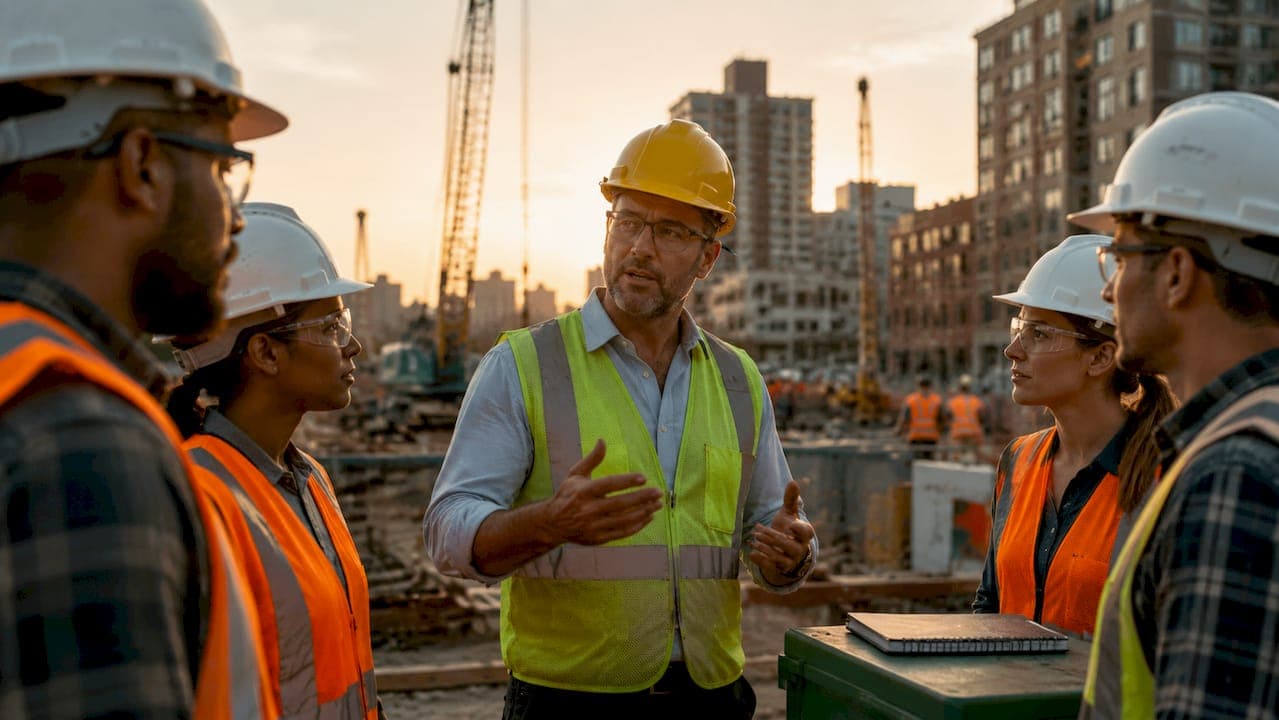
A site foreman is defined as the primary on-site supervisor responsible for directing construction crews, enforcing safety standards, and translating project plans into daily work. In UK construction, the role sits between senior management and the workforce, making it one of the most operationally critical positions on any build. Understanding the role of site foreman explained in full means looking beyond the job title to the daily decisions, leadership demands, and technical judgement that keep a project on track. This guide covers site foreman responsibilities, key skills, role distinctions, and the direct impact a foreman has on project outcomes.
What are the essential responsibilities of a site foreman on UK construction sites?
The site foreman is directly accountable for productivity, quality control, safety compliance, and incident reporting on site. These are not occasional duties. They are the daily framework around which every shift is organised.
Core site foreman duties include:
- Assigning tasks based on each worker's skills, experience, and the materials available that day
- Conducting toolbox talks at the start of each shift to brief the crew on hazards, method statements, and daily targets
- Monitoring quality throughout the working day, checking that work meets specification before it is covered or completed
- Documenting progress through daily site reports, including any incidents, near misses, or delays
- Managing materials and plant to avoid waste, shortages, or idle time caused by missing equipment
The foreman also acts as the first point of contact when something goes wrong. A delivery arrives late, a subcontractor fails to show, or a structural query needs an immediate answer. The foreman resolves or escalates each issue without waiting for a project manager to step in.
Pro Tip: Keep a brief written record of every toolbox talk, including who attended and what was covered. This protects you legally and demonstrates a consistent safety culture to inspectors and clients.
The tactical link between management and crews is what makes the foreman role so demanding. You are not simply passing on instructions. You are interpreting a programme, reading site conditions, and making real-time decisions that affect cost, safety, and quality simultaneously.
How does a site foreman differ from a superintendent or project manager?
Role confusion is common in UK construction, particularly on larger commercial projects where multiple supervisory tiers exist. The distinctions matter because they define authority, accountability, and communication flow.
| Role | Scope | Primary focus | Reports to |
|---|---|---|---|
| Site foreman | One crew or trade | Tactical daily execution | Superintendent or site manager |
| Superintendent | Entire site | Multi-crew coordination | Project manager |
| Project manager | Full project lifecycle | Programme, budget, client | Client or senior management |
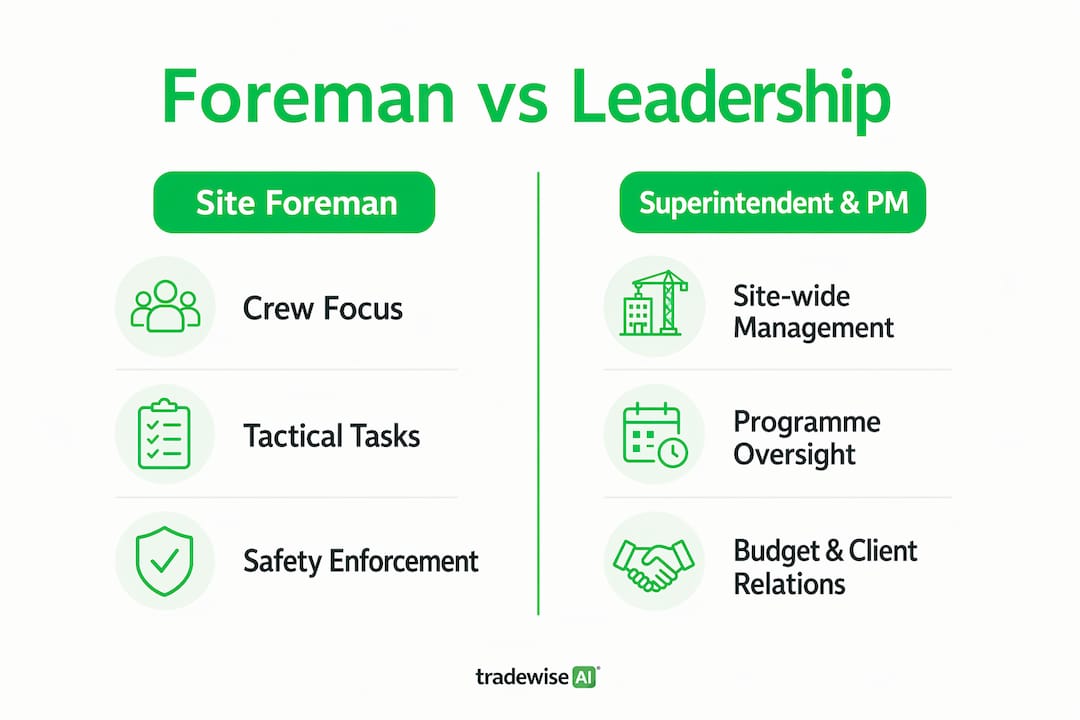
Foremen manage individual crews and focus on tactical execution, while superintendents manage the entire site and coordinate multiple foremen. On large commercial projects, it is common for 10–20 foremen to report to a single superintendent. That ratio illustrates how much ground-level decision-making sits with the foreman rather than above them.
The project manager operates at a different level entirely. Their focus is the programme, the budget, and the client relationship. They rely on the superintendent and foremen to translate that programme into physical progress on site. A foreman who understands this hierarchy communicates upward efficiently, flags issues early, and avoids overstepping into decisions that belong at a higher level.
For a broader view of how these roles fit together, the construction site roles guide from Tradewisehq covers the full hierarchy in detail. Understanding where the foreman sits within the wider structure is the first step toward performing the role with confidence.
What skills and qualifications are required to become a site foreman?
The site foreman job description typically requires 3–4 years of apprenticeship or vocational training plus 1–2 years of field experience before stepping into a supervisory position. That baseline matters. A foreman without genuine trade knowledge loses credibility with the crew within days.
Beyond technical competence, the skills that separate effective foremen from average ones are:
- Leadership under pressure: Making clear decisions when conditions change, without showing uncertainty to the crew
- Communication across levels: Speaking plainly to workers, writing clearly in reports, and briefing management concisely
- Safety culture promotion: Not just enforcing rules but explaining why they exist, which builds genuine compliance rather than reluctant box-ticking
- Adaptability: Adjusting work sequences when materials are delayed, weather changes, or a trade runs ahead of schedule
- Problem-solving on the spot: Identifying a conflict between drawings and site conditions before it becomes a costly rework
Employers now prioritise leadership, communication, and adaptability over pure technical skills when hiring site foremen. This reflects a shift in how the construction industry views the role. A foreman who can motivate a crew through a difficult week delivers more value than one who simply knows the trade inside out.
The transition from skilled worker to supervisor is where many capable tradespeople struggle. You are no longer one of the team in the same way. Avoiding conflicts with former peers is a common pitfall that lowers productivity and safety. The solution is consistency: apply the same standards to everyone, explain your decisions, and earn respect through behaviour rather than rank.
Pro Tip: If you are moving into a foreman role for the first time, have a direct conversation with your crew about the change in your responsibilities. Clarity from day one prevents resentment and sets the tone for how you will lead.
Why is the site foreman critical to construction project success?
The importance of a site foreman becomes most visible when the role is filled poorly. Delays, rework, safety incidents, and crew disengagement are the predictable results of weak frontline supervision. A strong foreman prevents all four.
Consider how a typical project day unfolds without effective foreman oversight:
- Workers arrive without clear task assignments and spend the first hour waiting for direction
- A material shortage goes unreported until it halts an entire trade, pushing the programme back by a day
- A quality issue is covered over rather than corrected, requiring expensive remediation later
- A near miss goes undocumented, leaving the company exposed to liability
Each of these failures is preventable. Inadequate communication from foremen is a leading cause of avoidable project setbacks. The foreman who briefs the crew clearly, checks materials the evening before, inspects work before it is concealed, and logs every incident removes these risks systematically.
"A foreman who fosters a strong safety culture and communicates effectively can prevent site confusion and costly delays." — Build-Wire, Construction Foreman Job Duties
Foremen also serve as the project's early-warning system. They identify material conflicts, scheduling clashes, and workforce shortages before these issues reach the superintendent as full-blown problems. Proactive problem-spotting distinguishes top-performing foremen from those who simply react to crises.
The working foreman model is common on smaller UK sites, where the foreman contributes hands-on labour while managing the crew. This requires a deliberate shift in attention throughout the day. When you are working with your hands, you are not watching the site. The best working foremen build regular pause points into their day to step back, assess progress, and address emerging issues before returning to the tools.
Effective subcontractor communication is another area where the foreman's influence is direct. On sites with multiple trades, the foreman coordinates sequencing, resolves clashes between subcontractors, and keeps the main contractor informed of progress and problems.
Key takeaways
The site foreman is the operational backbone of any UK construction project, responsible for crew direction, safety enforcement, quality control, and early problem identification.
| Point | Details |
|---|---|
| Primary accountability | Foremen are directly responsible for productivity, safety compliance, and daily incident reporting. |
| Role distinction | Foremen manage one crew tactically; superintendents coordinate the full site across multiple foremen. |
| Skills beyond trade knowledge | Leadership, communication, and adaptability matter more to employers than technical expertise alone. |
| Early-warning function | Top foremen identify material and scheduling conflicts before they escalate into programme delays. |
| Respect through consistency | Crew respect is earned by applying fair standards and clear communication, not by job title. |
The foreman role is harder than most people admit
I have spoken with dozens of experienced tradespeople who stepped into foreman roles expecting the transition to be straightforward. Most found the opposite. The technical side was familiar. The leadership side was not.
What strikes me most is how undervalued the communication component is until something goes wrong. A foreman who gives vague instructions, avoids difficult conversations, or fails to document incidents creates a slow-burning problem that eventually costs the project significantly. The best foremen I have observed treat communication as a skill they actively work on, not a personality trait they either have or lack.
The other thing worth saying plainly: the working foreman model, common across UK trades, creates a genuine tension. You cannot supervise effectively while your head is down on the tools. The foremen who manage this well are the ones who build a rhythm into their day, checking in with each part of the crew at set intervals rather than waiting for problems to find them.
The industry is also changing. Digital reporting, mobile job management, and real-time crew tracking are becoming standard on mid-size and larger UK sites. Foremen who resist these tools are putting themselves at a disadvantage. Those who adopt them find that the administrative burden lightens considerably, freeing up time for the supervisory work that actually moves the project forward.
— Mateusz
How Tradewisehq helps site foremen manage daily operations
Running a site efficiently means keeping crew assignments, safety records, materials, and daily reports in one place rather than across paper, text messages, and spreadsheets.
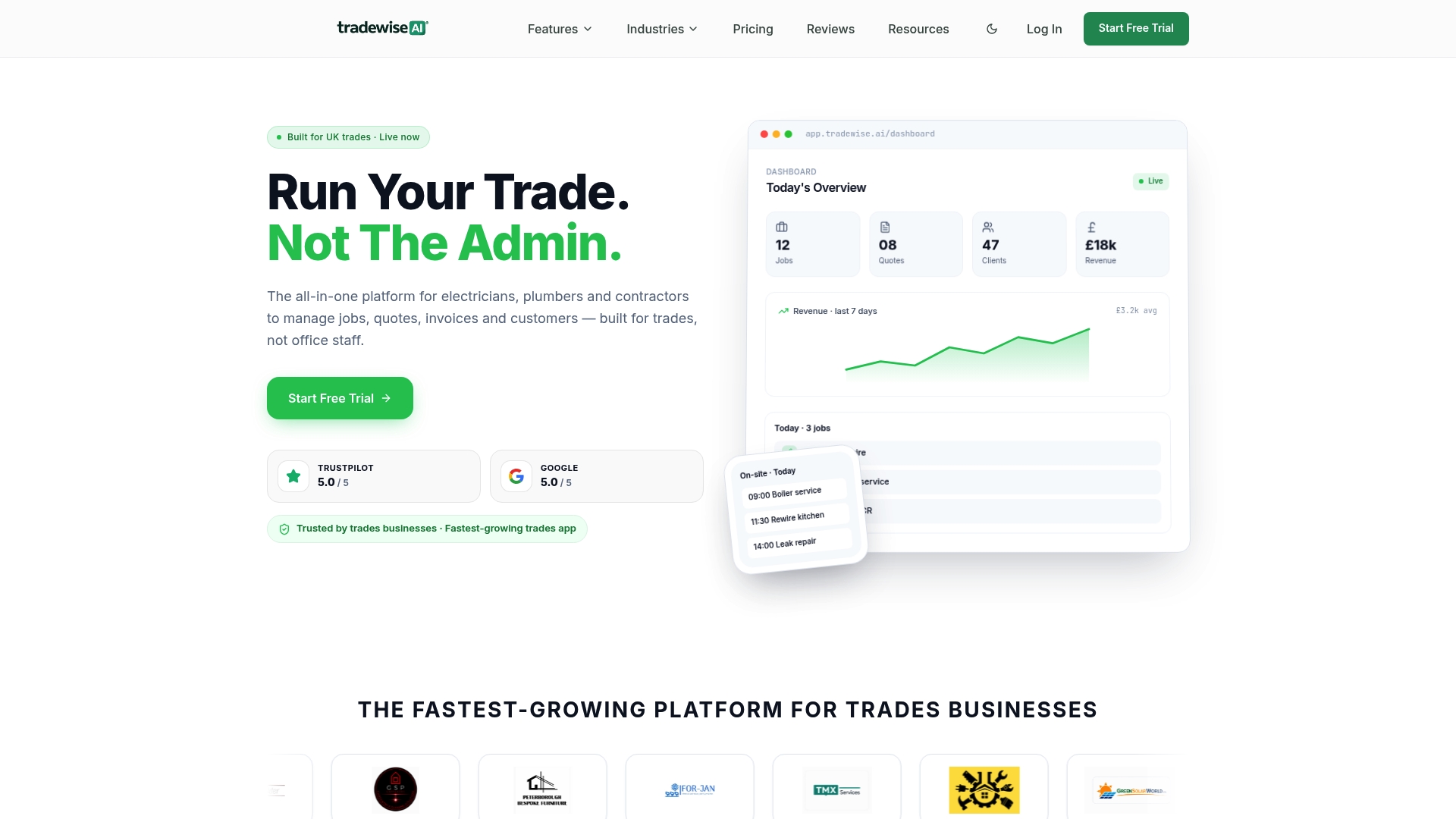
Tradewisehq is an AI-powered trade management platform built for exactly this kind of operational complexity. Site foremen can coordinate crew tasks, log daily progress, manage job communications, and track materials from a single mobile app. The platform syncs live across the workforce, so superintendents and project managers see updates in real time without chasing the foreman for a phone call. If you are looking to reduce the administrative load and keep your site running to programme, explore Tradewisehq and see how it fits your operation.
FAQ
What does a site foreman do on a typical day?
A site foreman assigns tasks to crew members, conducts toolbox talks, monitors quality and safety compliance, documents progress, and manages materials and plant. They also act as the first point of contact for any on-site issues that arise during the shift.
How does a site foreman differ from a site manager?
A site foreman manages one crew or trade and focuses on daily tactical execution. A site manager or superintendent oversees the entire site, coordinating multiple foremen and reporting to the project manager.
What qualifications do you need to become a site foreman in the UK?
Most site foreman roles require 3–4 years of trade apprenticeship or vocational training plus at least 1–2 years of field experience. A CSCS Gold Card, SMSTS or SSSTS certificate, and a strong safety record are standard requirements in the UK.
Why is the site foreman important to project safety?
The foreman is the primary enforcer of safety standards at crew level, conducting daily briefings, identifying hazards, and documenting incidents. A foreman who builds a genuine safety culture reduces accidents and protects the company from liability.
Can a site foreman also work as part of the crew?
Yes. The working foreman model is common on smaller UK sites, where the foreman contributes hands-on labour alongside supervisory duties. The key is building regular check-in points into the day to maintain oversight while working with the tools.