

Construction client communication best practices are defined as the structured, documented processes that contractors use to keep clients informed, manage expectations, and prevent disputes throughout a project. Poor communication is the leading cause of construction disputes in the UK, not poor workmanship. The National Association of Home Builders (NAHB) recommends weekly written updates as the minimum standard for residential projects. Contractors who follow structured communication protocols report shorter payment cycles, fewer post-project conflicts, and stronger referral rates. This guide gives UK construction managers and contractors the specific habits, tools, and frameworks that produce those results.
1. Why regular structured updates are the cornerstone of client communication
The single most effective builder client communication tip is the Friday Afternoon Update. This is a brief weekly progress email sent every Friday covering three things: work completed that week, tasks planned for the following week, and any decisions the client needs to make. It takes roughly five minutes to write and costs nothing to send.
The results are significant. A structured weekly summary eliminates up to 80% of reactive client check-in calls. That reduction matters because every unplanned call pulls a site manager away from productive work and creates an informal record that is difficult to reference later.

The NAHB treats weekly written updates as the baseline standard, not a premium service. Clients who receive consistent updates feel in control of the project. Clients who do not receive updates fill the silence with anxiety and assumptions, which leads to calls, complaints, and disputes.
A strong Friday update covers:
- Work completed: Two to four specific tasks finished that week, with photos where possible
- Upcoming tasks: What starts on Monday and the expected sequence for the following week
- Decisions needed: Any choices the client must make before work can proceed, with a clear deadline
- Known delays or risks: Any weather, material, or subcontractor issues that may affect the schedule
Pro Tip: Set a recurring calendar reminder for 3:30 PM every Friday. Write the update before you leave the site. Clients who receive updates at a predictable time stop sending mid-week check-in messages.
Automation makes this habit easier to maintain. Platforms that pull site data, photos, and task logs into a pre-formatted template reduce the time needed to prepare each update. Tradewisehq includes automated reporting features that support structured daily reporting and make the Friday update a two-minute task rather than a twenty-minute one.
2. How to document scope changes and approvals to prevent disputes
Contractors using formal change order processes report 40% fewer disputes after project completion than those who handle changes verbally. That statistic reflects a simple truth: verbal agreements are forgotten, misremembered, and unenforceable.
The change order hard stop is the most protective policy a contractor can adopt. The rule is straightforward: no work continues on any change to scope, price, or timeline until the client has approved it in writing. Not a text message. Not a verbal "yes" on site. A written, dated approval via email or a project management platform.
A well-structured change order document contains four elements:
- Problem statement: What changed and why, stated in plain language
- Impact details: The effect on cost, timeline, and any dependent tasks
- Proposed solution: Exactly what work will be done and at what price
- Next steps: What the client must do to approve, and the deadline for that approval
Text messages are legally weak and practically useless in a dispute. They lack timestamps that hold up in court, get buried in unrelated conversations, and provide no clear record of what was agreed. Moving all scope, price, and timeline discussions to email or a centralised platform creates a searchable, timestamped record that protects both parties.
Pro Tip: Include a simple line at the bottom of every change order: "Work on this change will begin once written approval is received." This removes ambiguity and gives the client a clear prompt to act.
Contractors with structured communication systems also report payment cycles that are 30–50% shorter than those relying on verbal agreements. Clear documentation removes the most common reason clients delay payment: uncertainty about what they agreed to pay.
3. Selecting the right communication channels for client interaction
Effective client communication in construction depends on choosing channels that create clear, searchable records. The convenience of text messaging is its biggest liability. Texts are informal, context-free, and nearly impossible to organise by project or topic.
The right channel depends on the type of communication:
- Email: Best for formal updates, change order approvals, and any communication that may need to be referenced later
- Client portals: Best for centralising all project documents, photos, approvals, and messages in one searchable location
- Phone calls: Best for urgent issues or sensitive conversations, always followed by a written summary via email
- Video walkthroughs: Best for explaining complex changes or progress to clients who are not on site regularly
Centralised communication platforms link every message, photo, and approval to a specific project. This reduces repeat explanations and creates a searchable timeline that both the contractor and client can access. When a client asks "What did we agree about the kitchen layout?", the answer is two clicks away rather than a twenty-minute search through a phone.
| Communication type | Recommended channel | Why it works |
|---|---|---|
| Weekly progress update | Email or client portal | Searchable, timestamped, professional |
| Scope change approval | Email or project platform | Creates a binding written record |
| Urgent site issue | Phone call, then email summary | Speed plus documentation |
| Visual progress update | Photo gallery or short video | Builds confidence for off-site clients |
| Payment reminder | Automated platform message | Consistent, non-confrontational |
Visual communication is underused in UK construction. A short 60-second walkthrough video sent on a Friday carries more weight than three paragraphs of text. Clients who can see progress feel reassured. Clients who can only read about it remain uncertain.
Pro Tip: Use mobile construction software to capture and send site photos directly from your phone. Attaching three photos to a weekly update takes 90 seconds and dramatically improves client confidence.
4. Setting client expectations from the project outset
The most common source of client frustration is not a problem on site. It is a gap between what the client expected and what the contractor delivered, in terms of communication frequency, not build quality. Closing that gap starts on day one.
A project kick-off communication agreement should cover:
- Update cadence: How often the client will receive updates and in what format
- Preferred contact method: Which channel to use for routine questions versus urgent issues
- Response times: How quickly the contractor will respond to client messages
- Client responsibilities: What information or decisions the client must provide, and when
- Delay notification: How and when the contractor will communicate schedule changes
- Change order process: The exact steps required to approve any scope or price change
Assigning a single named contact as the client communication lead removes ambiguity. Clients should know exactly who to call, email, or message. When multiple team members respond to the same client, messages conflict and trust erodes.
Templates and standard workflows make consistent messaging possible across projects. A contractor managing multiple projects cannot rely on memory or improvisation to maintain communication quality. Standard templates for weekly updates, change orders, and delay notifications create a professional baseline that every client receives, regardless of project size.
5. Leveraging automation and visual communication to boost client satisfaction
Automation is the most underused tool in construction client relationship management. Automated reporting tools reduce update preparation time by up to 85% and increase update frequency by three times. That means contractors who previously sent one update per fortnight can send three per week with less effort.
The business case for full-cycle automation is clear. Contractors who automate the complete client communication cycle, from progress reports through change order approvals to payment reminders, see 40% higher client retention than those who automate only part of the process. Partial automation creates gaps that clients notice.
Visual communication formats differ by client type. Residential clients respond well to photo galleries and short walkthrough videos that show tangible progress. Commercial clients typically prefer structured written reports with milestone tracking and cost summaries. Knowing your client type and tailoring the format accordingly is a straightforward way to improve perceived professionalism without adding significant time.
Communication is now considered part of the product in construction. Proactive, clear updates win referrals as reliably as quality workmanship. A client who felt informed and respected throughout a project will recommend the contractor. A client who felt ignored, even on a technically excellent build, will not.
Pro Tip: Automate payment reminders as part of your communication workflow. A polite, automated reminder sent three days before an invoice is due removes the awkwardness of chasing payment manually and keeps cash flow predictable.
6. Communicating problems and delays with confidence
Clients consistently report that transparency about setbacks matters more to them than the setbacks themselves. A contractor who calls a client the moment a delay is identified, explains the cause clearly, and outlines the revised plan, builds more trust than one who delivers a perfect project with no communication.
The instinct to delay bad news is understandable but counterproductive. Clients who discover a problem through their own observation, rather than from the contractor, feel deceived. That feeling is far harder to recover from than the problem itself.
A delay notification should follow a simple structure: what happened, why it happened, how it affects the timeline, and what the contractor is doing to address it. Keep it factual and solution-focused. Avoid blame and speculation. Send it the same day the issue is identified, not after the weekend.
Documenting delay notifications in writing serves two purposes. It demonstrates professionalism and good faith to the client. It also creates a record that protects the contractor if the delay later becomes a dispute. A timestamped email explaining a material delivery failure is far more useful than a verbal conversation that neither party can accurately recall.
Key takeaways
Structured, documented communication is the single most effective way to reduce disputes, shorten payment cycles, and build client trust in UK construction.
| Point | Details |
|---|---|
| Weekly updates reduce calls | A brief Friday update eliminates up to 80% of reactive client check-in calls. |
| Written approvals prevent disputes | Formal change order processes produce 40% fewer post-project disputes. |
| Channel choice protects contractors | Email and client portals create timestamped records; text messages do not. |
| Automation multiplies output | Automated tools cut update prep time by 85% and triple update frequency. |
| Expectations set on day one | A kick-off communication agreement prevents the most common source of client frustration. |
Communication is a product, not a soft skill
I have watched contractors lose repeat business not because of a structural failure or a budget overrun, but because the client felt ignored for six weeks. The build was fine. The communication was not. That is a preventable loss.
The shift I have seen in the UK construction sector over the past few years is real. Clients now expect the same transparency from their builder that they get from a courier tracking their parcel. They want to know where the project is, what comes next, and who to contact if something changes. Contractors who treat communication as an administrative burden will lose clients to those who treat it as a core part of the service.
The discipline required is not complicated. A Friday email, a written change order, a phone call the moment a delay is identified. These are not high-tech solutions. They are habits. The contractors I have seen build the strongest client relationships are not the ones with the fanciest software. They are the ones who are consistent. They send the update every Friday, without exception. They never start work on a change without written approval. They call the client before the client calls them.
Automation helps, but it does not replace the underlying commitment. Use job management software to reduce the time each task takes, not to avoid doing the task. The contractor who combines good habits with the right tools will outperform both the contractor who has good habits but no tools, and the one who has tools but no discipline.
— Mateusz
How Tradewisehq supports structured client communication
Tradewisehq is an AI-powered trade management platform built for contractors, builders, and tradespeople who want to professionalise their client communication without adding hours to their week.
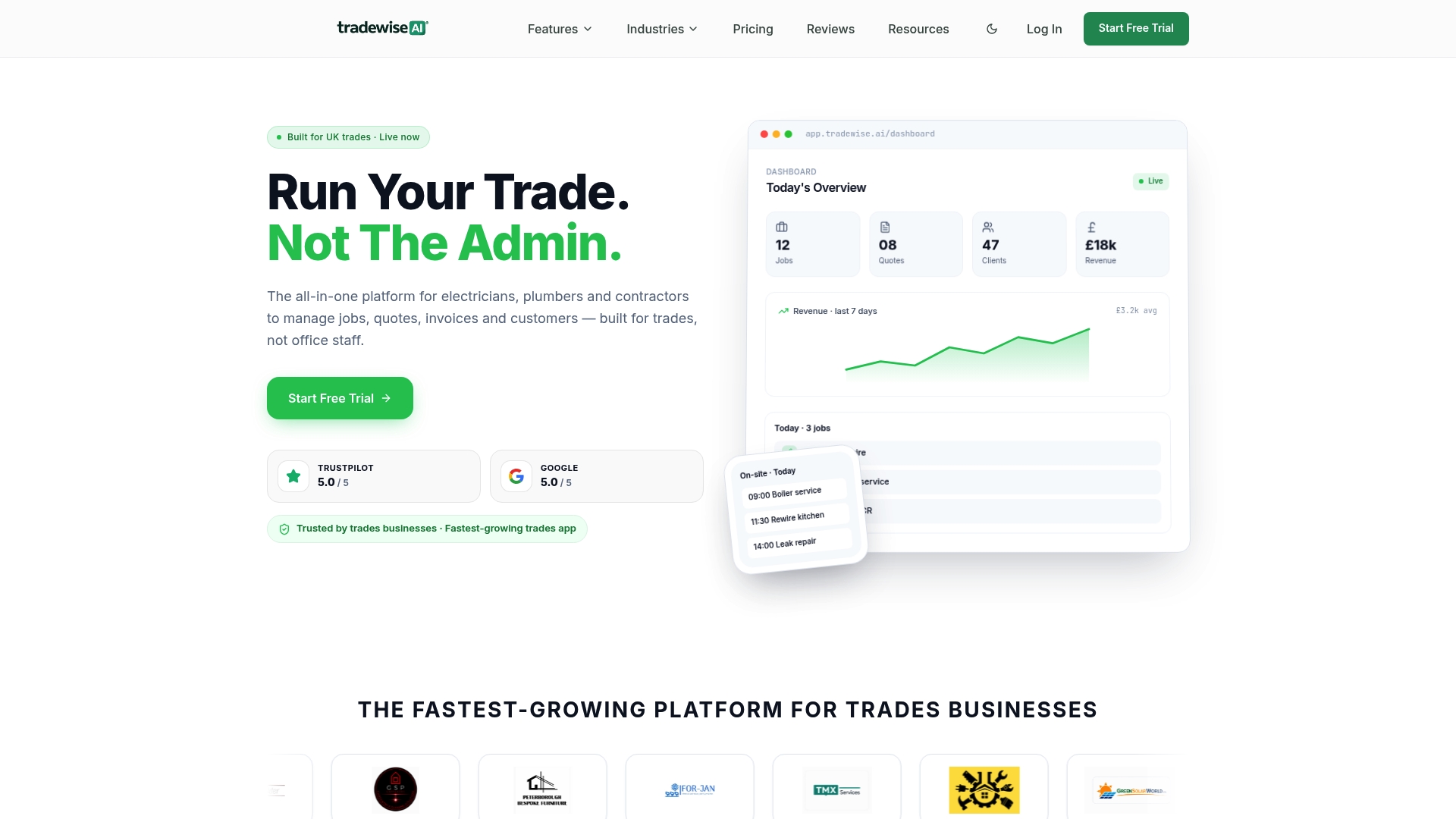
The platform centralises job updates, change order approvals, invoicing, and client messaging in one place. Automated reporting pulls site data into pre-formatted updates, reducing preparation time and keeping clients informed on a consistent schedule. For contractors looking to move away from scattered text threads and missed approvals, Tradewisehq provides the structure and automation to make best-practice communication the default, not the exception. Every message, photo, and approval is linked to the relevant project and searchable from any device.
FAQ
What is construction client communication?
Construction client communication is the structured process of keeping clients informed about project progress, scope changes, and decisions through documented, consistent updates. Effective communication covers written progress reports, formal change orders, and clear protocols for delay notifications.
How often should contractors update clients?
The NAHB recommends weekly written updates as the minimum standard for residential construction projects. A brief Friday progress email covering completed work, upcoming tasks, and decisions needed is the most effective format.
Why should contractors avoid text messages for project decisions?
Text messages are legally weak, lack searchable context, and get buried in unrelated conversations. Any decision affecting scope, price, or timeline must be documented via email or a project management platform to create a timestamped, enforceable record.
How do formal change orders reduce disputes?
Contractors using formal change order processes report 40% fewer post-project disputes than those handling changes verbally. Written approvals create a clear record of what was agreed, removing the ambiguity that causes most payment and scope conflicts.
What is the fastest way to improve client communication on site?
Implementing a structured weekly update, sent every Friday, is the single fastest improvement a contractor can make. This one habit reduces reactive client calls by up to 80% and builds consistent trust throughout the project.